When sexuality meets faith in Indonesia

Diego García Rodríguez 29Diego1InsideIndonesia

In March 2010, the International Lesbian, Gay, Bisexual, Trans and Intersex Organisation Conference was set to go ahead in Surabaya, Java. A group of conservative Muslims, some of them members of the Front Pembela Islam (Islamic Defenders Front), occupied the hotel where Conference participants were staying. The police ordered that the conference be cancelled for reasons of public safety. Later that year the same group of conservative Muslims attacked an international gay film festival in Jakarta. In response to these events, a group of ten young people came together to create the Youth Interfaith Forum on Sexuality (YIFOS).

Four years later, during the summer of 2014, I meet Yulia and Vica, two of the organisation’s members, in a café in Malioboro Street, Yogyakarta. Both have come from Jakarta to discuss ideas with Yogyakarta-based activists working on lesbian, gay, bisexual and transgender (LGBT) rights in the city. Yulia and Vica seem excited to talk about their project. While having an ice cream, with some Arabic-style Indonesian songs playing in the background, we speak about sexuality and faith in Indonesia, and the work of YIFOS.

Creating safe spaces

YIFOS began as a community-based organisation bringing together members of Muslim, Catholic and Buddhist communities. The organisation’s goal was to foster exchange between members of different religions about faith and sexuality. ‘In Indonesia we never have the chance to discuss our own sexuality,’ Vica points out. The lack of safe spaces for young people to speak freely about sexuality and faith was what prompted YIFOS’s establishment.

From its conception, YIFOS has aimed to involve religious leaders in its efforts. ‘So we invited religious leaders to talk at local groups and discuss sexuality and faith.’ Yulia explains that people of all religions are welcome to join this discussion, providing they are willing to bring an open mind. The focus of YIFOS dialogues is always to put young people first, allowing them to search out grounds of commonality, negotiating religious values and issues of concern around sexuality and the LGBT community, without fear of judgement.

The inclusion of religious authorities in debates on sexuality is a new phenomenon in Indonesia. The country has seen the emergence of interfaith organisations such as Interfidei in Yogyakarta in 1991, or the Regional Interfaith Youth Network formed in Ambon in 2005. However, YIFOS is the first space in which simultaneous discussions on sexuality and faith are encouraged. Unlike other groups working in a single city or region, YIFOS has operated across the country since 2011. For Catholic communities, the organisation has visited centres where regular discussions among youth regarding sexuality were already in place. With participants already in place, all that YIFOS needs to provide are materials. YIFOS also works with Islamic youth organisations on university campuses.

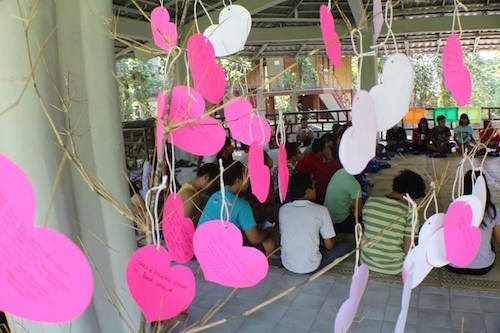
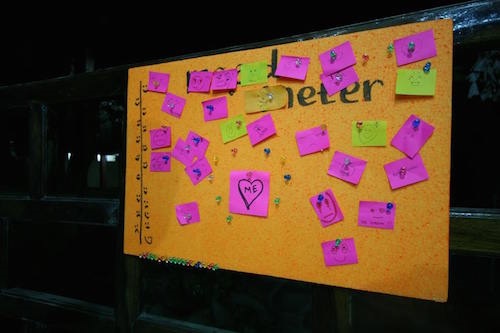
The participants express their feelings after one of the sessions. Yulia Dwi AndriyantiThe participants express their feelings after one of the sessions. Yulia Dwi Andriyanti

Before the arrival of YIFOS, reflects Yulia, ‘it was quite difficult to talk about sexuality within faith groups; but also when we went to LGBT groups, they were quite reluctant to speak about God.’ By creating safe spaces where young people can feel comfortable speaking about their sexual and religious identities, the participants in YIFOS dialogues are able to realise what they have in common as young people, instead of focusing on their differences.
Continue reading “When sexuality meets faith in Indonesia”

As sex workers, we welcome Amnesty International’s policy — it will help empower us

Sex workers around the world face diverse challenges: stigma, discrimination, violence – including state violence – harassment, criminalisation, isolation, marginalisation and a lack of adequate health services.

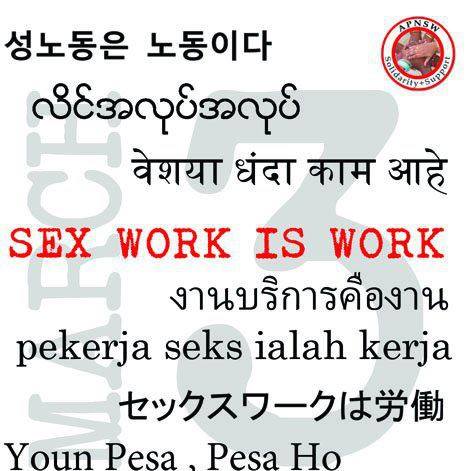
Sadly, few people want to talk about these issues.APNSW_sexworkisworkMoral and religious discussions about whether the buying and selling of sexual services is right or wrong, on the other hand, continue to be fashionable and dominate media coverage. Why are so many people quick to judge sex workers as either victims needing to be rescued or criminals needing to be stopped, but so slow to listen to what we have to say?

All over the world there are laws and policies that seriously affect the lives of sex workers. Laws differ between and within countries, but rarely do these laws put sex workers’ needs and safety first. The Amnesty International policy does exactly that, and so we welcome this decision.

What does Amnesty’s policy mean for us?

Sex workers have been talking about decriminalisation for a long time, so Amnesty International’s decision is neither a destination nor a starting point, but it is certainly another milestone in our journey. Few human rights organisations have taken such a stand for sex workers. We hope more will join them.

Nothing will change immediately – this new policy is not a UN convention that states must implement. We will continue at the local, community, national and international levels to push for recognition of sex workers’ human rights, and we look forward to welcoming Amnesty’s country sections as new allies in this struggle.

Sex workers, sex worker organisations and allies from all over the world came together to support Amnesty’s proposal, signing letters in five out of the six official UN languages. Our global movement is stronger than ever, and with this debate and decision we are more visible than ever. Perhaps in future it will become unacceptable for the media to write an article or host a panel discussion about sex work without including sex worker voices advocating for human rights? (Perhaps, too, it will become unacceptable to publish the words of celebrities who know nothing of the reality of our experiences but feel qualified to preach on our behalf?)

We hope Amnesty’s decision will move the discussion firmly into the sphere of human rights, rather than moral or religious frameworks. We hope it will put the question of decriminalisation at the forefront of these discussions, and help people understand the difference between decriminalisation and regulation/legalisation.

The advantage of decriminalisation is that it means all laws which prevent sex workers from working safely are removed, and sex workers can freely report crimes to the police without incriminating themselves or their clients. Under legalised regimes, there are usually strict regulations about how, when and where sex work can be done including registration cards, zoned areas and medical testing. While there can be significant protections and benefits for those who work inside these rules, in practice most sex workers are unwilling or unable to do so. When sex workers choose to work outside the regulated system they are just as criminalised as in other countries.

Actions speak louder than words. And it is sex workers who, every day, bear the brunt of actions intended to help us but which in reality lead to harm. These include 100% condom use programmes, compulsory medical testing, violent raids on brothels, and the criminalisation of our clients, all of which take power away from sex workers and give it instead to the corrupt and the abusive among police, officials, clients and others.

Why are so many countries quick to consider these unhelpful policies? And yet why are so few countries willing to follow policies that improve the wellbeing of sex workers? Class, morality and conservative religious values are often the unexamined filters through which many people look at sex work. Feminists of the global south have long supported the agency of sex workers; feminists from other places might consider examining the history of the lens they use, and where they stand when looking through it.

The global sex worker movement, of which APNSW (the Asia Pacific Network of Sex Workers) is part, is a workers’ network; it is not run by or for management. The rights we fight for will be familiar to Guardian readers and to anyone from the global labour movement: the rights to associate and organise, to be protected by the law, to be free from violence and discrimination; the rights to privacy, health, movement and migration, and of course, the right to work and to freely choose the nature of that work.

Many countries around the world make policies that empower police against sex workers. Amnesty International’s policy seeks to empower sex workers. If sex workers can have enabling environments in which to work, the world will not need to spend millions of dollars to improve our health. We can address our social, economic, political and health problems ourselves.

* * *

Kay Thi Win is coordinator for the Asia Pacific Network of Sex Workers

_____________________

Reposted from: The Guardian

Not A Crime

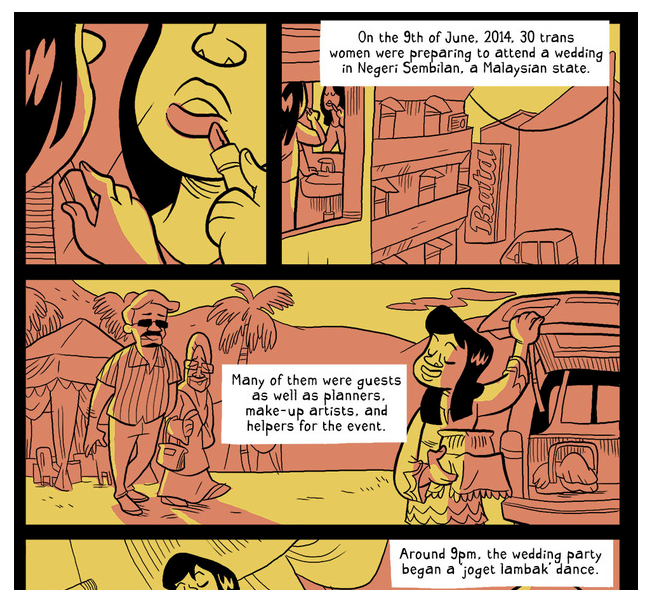
“Not a Crime” is a comic by Malaysian cartoonist, animator and illustrator Kazimir Lee, on the persecution and resistance of mak nyah in Malaysia.

Kazimir Lee - Not A Crime
The comic documents the arrest of 17 trans women at a wedding in June 2014, under Section 66 of the Sharia Criminal Enactment that declared ‘crossdressing’ an offence. In November 2014, a landmark ruling by the Malaysian Federal Court struck down Section 66 as unconstitutional, particularly in relation to violating freedom of expression.

Full comic available on Kazimir Lee’s website here.

1100 Organizations & Individuals ask Amnesty International to support decriminalization of sex work

CSBR joined over 200 human rights organizations from across the world to support the open letter by the International Committee on the Rights of Sex Workers in Europe (ICRSE), which urges Amnesty International Board of Directors to support their draft policy on decriminalization of sex work. The letter was also signed by over 800 individuals. ICRSE logo

Download the PDF with full letter, briefing note and endorsements/sites/default/files/userfiles/files/ICRSE letter and briefing note to AI ICM Dublin August 2015.pdf

Read the article by ICRSE in the Guardian Development: http://www.theguardian.com/global-development/2015/aug/04/amnesty-must-stand-firm-decriminalising-sex-work
Continue reading “1100 Organizations & Individuals ask Amnesty International to support decriminalization of sex work”

Statement delivered by Pinar Ilkkaracan on behalf of CSBR & the Women’s Major Group at Post-2015 Negotiations

Statement delivered by Pinar Ilkkaracan on behalf of CSBR & the Women’s Major Group at the Post-2015 negotiations in New York.

—–

July 28th, 2015

Thank you Ambassador Kamau and Ambassador Donoghue for this meeting.

We thank you very much for the recognition and inclusion of gender equality as a cross-cutting issue throughout the document and the reference to realization of gender equality in the preamble. We appreciate deeply that you have heard our voice.

We also thank you for the inclusion of references to the Beijing Platform for Action, the Program of Action of the International Conference on Population and Development and the outcome documents of their respective reviews in paragraph 12.

We would like to ask for your support to retain these references in their entirety. Beijing, ICPD and the outcome documents of their reviews constitute two decades of negotiations, accumulated knowledge and experience guiding necessary action on gender equality, health, population and development. They serve as the basis and framework of goals 3 and 5.

If our hard-fought stand-alone goal on gender equality, along with its targets, is not placed within the general framework of Beijing, ICPD and their reviews, it will attain a rather much limited and inadequate quality. In that case, it will not be a step forward, but rather a step backward in women’s and girls’ decades of struggle for the realization of gender equality.

We thank you again for the historical success you have accomplished and your support in the last three years.

—–

Reposted from Sustainabledevelopment.un.org

Imagine a Feminist Internet

CSBR is excited to join the Association for Progressive Communications (APC)’s ongoing creative conversation that asks us to #ImagineAFeministInternet. #imagineafeministinternet

The first Global Meeting on Gender, Sexuality, & the Internet was held in May 2014 in Malaysia, and “brought together 50 participants from six continents comprising gender and women’s rights activists, LGBTQI (lesbian, gay, bisexual, trans* and intersex) movements, internet and technology rights organizations, and human rights advocates. The goal of the meeting was to bridge the gap between feminist movements and internet rights movements and look at intersections and strategic opportunities to work together as allies and partners.

The existing discourse around gender and the internet tends to focus on gender components lacking in polices that govern the internet, violations that take place as a result, and the need for increased women’s participation in decision-making forums. In a bid to reframe the conversation, the Global Meeting used a collaborative process to ask the question: ‘As feminists, what kind of internet do we want, and what will it take for us to achieve it?’” [1]

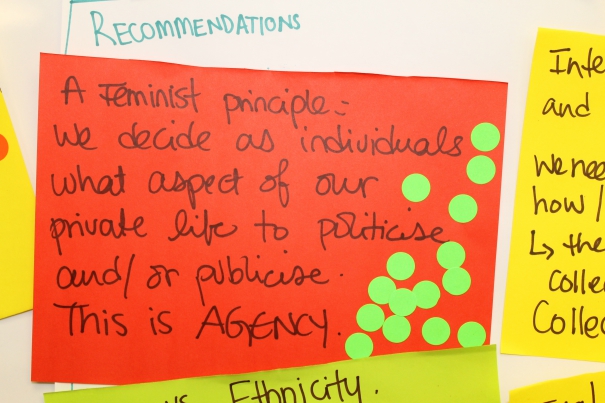
One key outcome of that meeting was the development of an evolving set of 15 Feminist Principles of the Internet, distilled from 3 days of collective conversations.

img_0927_0

The 2nd follow-up meeting is being held in Port Dickson, Malaysia, from July 22 – 24th. See more details from the re-post from APC’s website below, by Flavia Fascendi for APCNoticias.

* * *

By Flavia Fascendini for APCNoticias

PERGAMINO, Argentina, 17 July 2015

The second Imagine a Feminist Internet meeting organised by the Association for Progressive Communications (APC) will take place in Malaysia on 22-24 July 2015, as a continuation of the space opened in 2014, where over 50 participants from women’s rights, sexual rights and internet rights organisations discussed and explored intersections of gender, sexuality and technology.

The Feminist Principles of the Internet gathered together agreements from the 2014 meeting and from a Twitter conversation held before the event, and offered a framework to articulate how we imagine the internet as a public space that is safe, engaging, open, free, and conducive to feminist movements. The principles bring attention to five key areas of engagement:

  • Agency and autonomy
  • Digital access
  • Economy
  • Expression
  • Movements and public participation.

This year, a group of 45 activists, researchers, academics and techies are meeting again in Malaysia to deepen the discussion around feminism and technology. They will be tweeting on #imagineafeministinternet and we invite you to participate in the conversation by engaging with the hashtag and following@takebackthetech.

Here are some of the key questions we invite you to explore with us:

Access

How can we talk about internet access in a way that locates it within existing social, economic, political and cultural contexts?

How can we guarantee more applicable digital security tools for women in rural areas who have limited internet access?

What are the challenges that privatisation of internet access raises for connectivity for all?

How do we address the exploitation of “saving girls and women from poverty” rhetoric that is upholding further privatisation of internet access and platforms?

Beyond the conversation on access, what does feminist design and usage of technology look like?

Agency and autonomy

How does misogyny manifest on the internet beyond just Twitter trolls and how are women and queers responding to such forms of abuse?

Is the discussion on online misogyny leaving out the experiences of women from the global South?

What does it mean for us to be safe online, as individuals or groups? What are the threats?

How is surveillance, a historic tool of patriarchy, affecting our bodies, lives and activism today?

How do we frame children’s rights to healthy sexual exploration and positive sex education on the internet we have today?

How are feminists engaging with the question of consent on the internet?

Economy

How has the internet affected the gendered economy of migration and labour?

What is digital capital and how is data ownership affecting our struggle for economic justice?

How has the internet disrupted or reinforced capitalist frameworks?

What does it take to make an internet where girls are creators of tech, not just consumers?

How do feminists engage with the movement for free and open source software?

Expression

Is the internet enabling greater diversity of sexual expression or increasing opportunities for the policing of sexuality?

Is the take-down of content that is violent against women a form of censorship?

How has the internet facilitated or restricted the proliferation of feminist expression online?

Who is drawing the line between legitimate and illegitimate sexual expression? How do we understand feminist pornography?

What’s the deal with real name policies and the anti-anonymity rhetoric?

Has technology impacted the constructions of masculinity/femininity/transgenderism?

Movements and public participation

How has the internet facilitated feminist and queer movements of the global South? Are its public spaces dominated by particular forms of activism?

What sort of trends do we see in anti-feminist movements using the internet today?

Should feminists engage with influencing the policies of private companies?

How has the internet shifted the way we understand power, politics and agency? What new nodes of power does it facilitate?

How do we support the capacity of queer and women’s movements to move beyond ICTs for social change and towards a more political engagement with internet governance?

Do you have something to say on these issues? Share your analysis and thoughts on how you imagine a feminist internet and join the conversation on Twitter!

Follow the Storify and watch how this conversation develops! You can also take a peek at last year’s conversation.

Know more about the Feminist Principles of the Internet

The FPIs are a tool for feminist, women’s and queer movements to articulate and explore issues related to technology. Over the past year, the Feminist Principles have been used to build the case for a free, open and gender-just internet in both women’s rights and internet rights spaces globally, including at the Internet Governance Forum (IGF), the Human Rights Council, the Commission on the Status of Women (CSW), the ArabIGF, and the African School on Internet Governance. Groups have also taken this work local, organising around the principles in Bosnia and Herzegovina, India, Indonesia and the Democratic Republic of Congo, among other countries. The development of the Feminist Principles of the Internet also created a significant shift in the ability to articulate and advocate for gender and sexual justice online for those involved in its production.

 (END/2015)

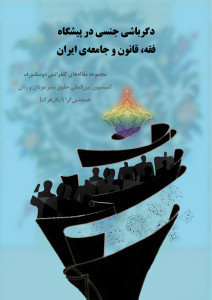
Lesbian, Gay, Bisexual and Transgender Rights in Iran: Analysis from Religious, Social, Legal and Cultural Perspectives

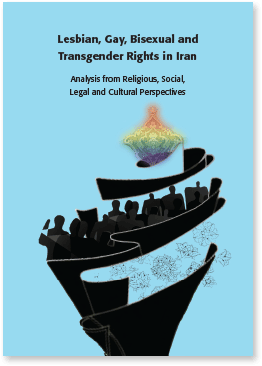
(NEW YORK) – On Tuesday, July 14, the International Gay and Lesbian LGBTRightsInIran-1Human Rights
Commission (IGLHRC) releases a collection of eight articles that offer innovative and provocative approaches to advance acceptance and improve understanding of the lesbian, gay, bisexual and transgender (LGBT) community of Iran. With contributions from prominent international activists, lawyers and scholars from IGLHRC’s second conference held in Düsseldorf, Germany in 2014, the collection, “Lesbian, Gay, Bisexual and Transgender Rights in Iran: Analysis from Religious, Social, Legal and Cultural Perspectives,” examines human rights for LGBT Iranians from legal, religious and socio-political perspectives, analyses and interpretations.

The publication includes a selection of the proceedings from the 2014 conference and is available in both English and Persian.

“This publication demonstrates the incredibly dynamic and layered approach of LGBT rights defenders in Iran,” said Jessica Stern, IGLHRC’s executive director. “We believe the wealth of information provided will raise new possibilities for Iranian LGBT activists and allies and provide a better understanding of the ongoing struggles of the community for those working in international solidarity.”

Among those who contributed to the publication are attorneys Mehrangiz Kar, Hossein Raeesi, and Mehri Jafari, who wrote legal papers about LGBT rights in Iran. Drs. Arash Naraghi and Mehrdad Alipour, both scholars, provided in-depth analyses of Islam and homosexuality. Rights activist Zeynab Alsadat Peyghambarzadeh and attorney Mani Mostofi presented papers that address the socio-political conditions for the Iranian LGBT community.

Mehrangiz Kar, a prominent Iranian lawyer and a human rights activist who attended the conference, said: “In the Dusseldorf gathering, we explored different aspects of sexual non-conformity. Through exchanging ideas from philosophical, religious, cultural, and human rights perspectives, we demonstrated that same-sex relationships existed as long as history can remember, although in recent years this subject has entered into policy-making and the theoretical sphere.”

Since 2012, IGLHRC’s Iran program has developed resources in Persian to help the LGBT community in Iran and their allies to advocate for basic rights and to promote greater understanding about sexual orientation and gender identity.

Dusseldorf2015“IGLHRC’s latest publication is a great addition to the growing number of Iran-related resources that we have developed over the past few years both in Persian and English,” said Hossein Alizadeh, IGLHRC’s Middle East and North Africa program coordinator, “IGLHRC’s publications in Persian are meant to counter the widespread censorship by the Iranian government on sexual orientation and same-sex relations. Our resources in Persian cover a wide variety of issues, from media training on LGBT rights for Iranian broadcasters to legal analysis for lawyers defending clients charged with same-sex activities.”

IGLHRC’s conference in Germany was hailed by participants as a significant opportunity to advance rights in Iran. “It has been a wonderful and very beneficial conference for me,” said Mehri Jafari, an Iranian-British lawyer and a long-time advocate for LGBT rights in Iran. “The chance to expose different ideas and research directions among experts was unique and highly valuable.”

*****

Download the publication in English here

Download the publication in Farsi here.

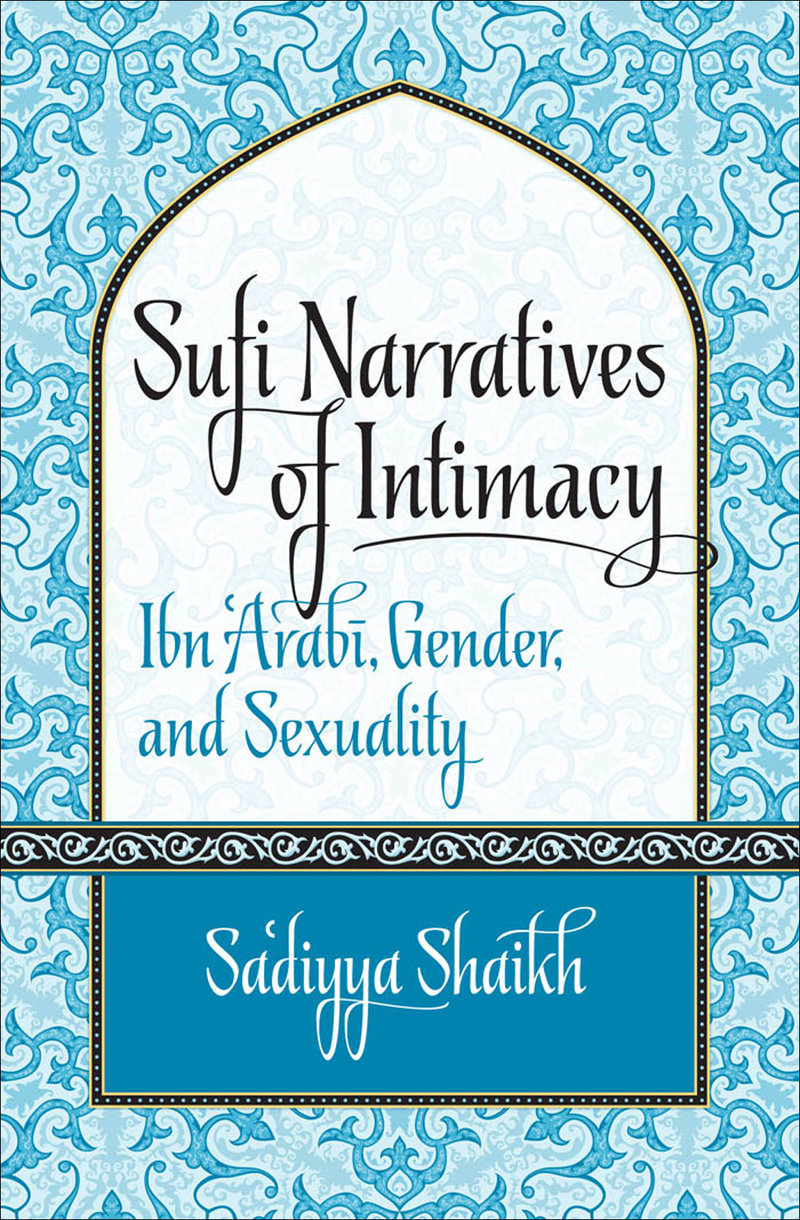
Sufi Narratives of Intimacy: Ibn ‘Arabī, Gender, and Sexuality

SufiNarrativesIntimacyCoverThirteenth-century Sufi poet, mystic, and legal scholar Muhyi al-Din ibn al-‘Arabi gave deep and sustained attention to gender as integral to questions of human existence and moral personhood.

Reading his works through a critical feminist lens, Sa’diyya Shaikh opens fertile spaces in which new and creative encounters with gender justice in Islam can take place. Grounding her work in Islamic epistemology, Shaikh attends to the ways in which Sufi metaphysics and theology might allow for fundamental shifts in Islamic gender ethics and legal formulations, addressing wide-ranging contemporary challenges including questions of women’s rights in marriage and divorce, the politics of veiling, and women’s leadership of ritual prayer.

Shaikh deftly deconstructs traditional binaries between the spiritual and the political, private conceptions of spiritual development and public notions of social justice, and the realms of inner refinement and those of communal virtue. Drawing on the treasured works of Sufism, Shaikh raises a number of critical questions about the nature of selfhood, subjectivity, spirituality, and society to contribute richly to the prospects of Islamic feminism as well as feminist ethics more broadly.

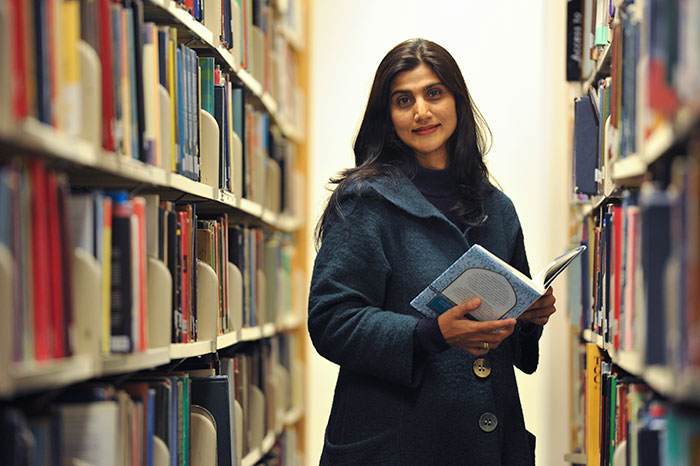
About the Author: Sa’diyya Shaikh is associate professor of religious studies at the University of Cape Town.

Available from:  University of North Carolina Press

***

on 12 June 2015, the book was awarded the 2015 University of Capetown Book Award. Below is the press release from UTC.

Shaikh_700

Assoc Prof Sa’diyya Shaikh has won the 2015 UCT Book Award for her exploration of the ideas of a 13th century Sufi mystic, poet and scholar in Sufi Narratives of Intimacy.

Her book combines feminism and Sufism in such a unique way that critics have labelled it “ground-breaking” and “pioneering”.

It represents a dialogue between the social and spiritual concerns of 21st century Muslims on the one hand and the rich legacy of a compelling Muslim thinker – Muhyi al-Din ibn al-‘Arabi – on the other.

Ibn ‘Arabi was a 13th century Sufi scholar and mystic from Andalusia in southern Spain who, according to Shaikh, held revolutionary ideas about gender. “In the thirteenth century, he holds the position that women can lead mixed (congregational) prayers not because they are equal (to men) and it’s the right thing to do, but because men and women have the same access to the fundamental condition of being human. So, everything that emerges from this condition of being fully human in terms of rights and responsibilities applies to both men and women. For many contemporary Muslims, this might seem like a radical position, but it comes from a deeply grounded understanding of Islam,” explains Shaikh.

The book had been years in the making. She began her study on Ibn ‘Arabi during her doctoral dissertation, and decided that she needed to make some of his dense esoteric ideas more accessible. “I hoped that if I could successfully write the book in a style that invited and drew in the reader, they might be enticed into staying with a set of sophisticated Sufi ideas long enough to see the value for contemporary societies,” she says.

Shaikh describes the book as reflecting a feminist voice within Islam. “I map how Sufism resides at the heart of Muslim spirituality and has fundamental implications for thinking about gender in terms of law, virtue and ethics. My book is about reading critically and constructively against the grain, and claiming a particular space within the Muslim tradition to talk back to patriarchy. It is about claiming an authority within the tradition not for me, but for a certain voice of radical human equality which resides within the tradition.”

A moment of awe

Shaikh first encountered the writings of Ibn ‘Arabi whilst participating in a graduate course on Sufism during her time as a Fulbright scholar in America.

“I was sitting with another graduate student reading (Ibn ‘Arabi) texts in Arabic and English, and it was one of those moments that time seemed to have condensed: the sun had set, hours had passed and the two of us didn’t notice the entire world go by. It was a moment of genuine, absolute awe. I came out of it marvelling at the vastness and possibilities of being human. The questions of what it means to be human within the Muslim tradition, and how gender influences one’s understandings of a person’s humanity remained with me.”

Her interest in existential questions like these underpins her interest in religion – more specifically Islam. “Religion has always provided a complex, ambivalent framing narrative for me to grapple with those questions. I don’t think there is one religious narrative at all. There are multiple narratives within religious traditions and I have struggled, grappled, challenged, worked with, been nourished by, found solace in, fought with, argued with, pulled apart and put together these narratives because in all its ambiguity and messiness, religion has informed my framing of reality,” she added.

Shaikh also grew up with interesting stories about Sufi teachers and saints, which her father simply referred to as “good Muslim people. He never called them Sufis”. The stories left a deep impression on her and the central characters caught her attention because of their honesty, integrity, courage and “some supernatural stuff, which as a kid you really like”. These stories of “good Muslims” also inextricably linked spiritual awareness – a God-consciousness – with that it meant to be an ethical and virtuous human being.

No contest between Islam and feminism

While Sufism demands adherence to rigorous spiritual discipline (like additional fasting or late-night prayers), Shaikh argues that Sufi spiritual practice extends to the individual’s engagement with his or her community. “Sufism is about embodying virtue. That virtue should extend from within oneself to society, an integral part of the spiritual life. Importantly justice is one of the central virtues in this tradition. The challenge to contemporary Muslims is to formulate dynamic and relevant understandings of justice for our times.”

Religion is also not the only vehicle for transformation of the self and society. “Feminism gives me a language with which I can speak to my comrades and sisters in other (religious) traditions or those in no traditions who are struggling with injustice because as human beings we share, confront and resist these realities collectively and as part of diverse communities of belonging.”

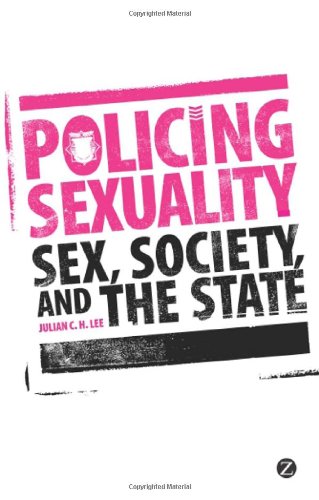
Policing Sexuality: Sex, Society and the State

PolicingSexuality
Policing Sexuality takes a look at the question of why and how states impose restrictions on the sexual and gender expressions and identities of their citizens. Author Julien C. H. Lee was first drawn to these questions through his participation in CSBR’s international comparative research on the causes of rising conservatism and moral policing of sexuality in Muslim societies.

The author presents both theoretical and ethnographic literature, distilling common themes and causes and presenting factors that contribute towards a state’s desire to control both the sexual behavior and sexual identity of its citizens, such as the influence of colonialism, class, religion, and national identity. This book features five crucial case studies from India, Britain, the USA, Malaysia, and Turkey. Policing Sexuality illuminates this fascinating study with comparative accounts.

Written in an accessible style, the book seeks “to give activists seeking to advance sexuality-related rights–but who may not be familiar with the academic literature related to it–an introduction to the field of sexuality studies, insights into how and why States seek to police sexuality, and reflections on ways and contexts surrounding attempts to advance those rights.” (Introduction, p. 2).

Order copies from Zed Books, and preview the Introduction from Zed Books here.


Reviews

‘Policing the body politic always entails sequestering the body sexual; the questions are only how and why, exactly where and when. This trans-regional examination of the different, and always self-contradictory, modalities of sexual state control and self-control is a treasure chest. Authors from Michel Foucault to Judith Butler would pawn one of their books to read this one: a combination of socio-cultural anatomies with humanist thinking. The anthropological wealth and comparative sociological imagination of this painstaking, yet amazingly easy-to-read book are scholarship at its best: accessible but never simplifying, liberating but never patronizing.’

– Gerd Baumann, University of Amsterdam, author of Contesting Culture (1996), The Multicultural Riddle (1999) and Grammars of Identity / Alterity: A Structural Approach (2005)


‘In a moment when state policies seeking to regulate sexual expression have emerged under many cultural and religious banners, affecting a wide range of sexual subjects, Julian Lee gives us an invaluable map to understand this moral policing more clearly and comprehensively.

Policing Sexuality is exceptional among recent works on sexuality, gender and public policy in providing a rich comparative analysis across five major country contexts encompassing both South and North. Lee’s eye for complexity along with his gift for lucid, straightforward prose illuminates “the evolutionary nature of sexuality rights and empowerment” and shows why we must never view culture as static or given nor human rights as sufficient without political struggle.’

– Rosalind P. Petchesky, Distinguished Professor of Political Science, Hunter College and the Graduate Center, City University of New York; author, Global Prescriptions: Gendering Health and Human Rights (2003); Sexuality, Health and Human Rights (with Sonia Corrêa and Richard Parker, 2008)

Why I Painted a Rainbow Flag on Israel’s Apartheid Wall

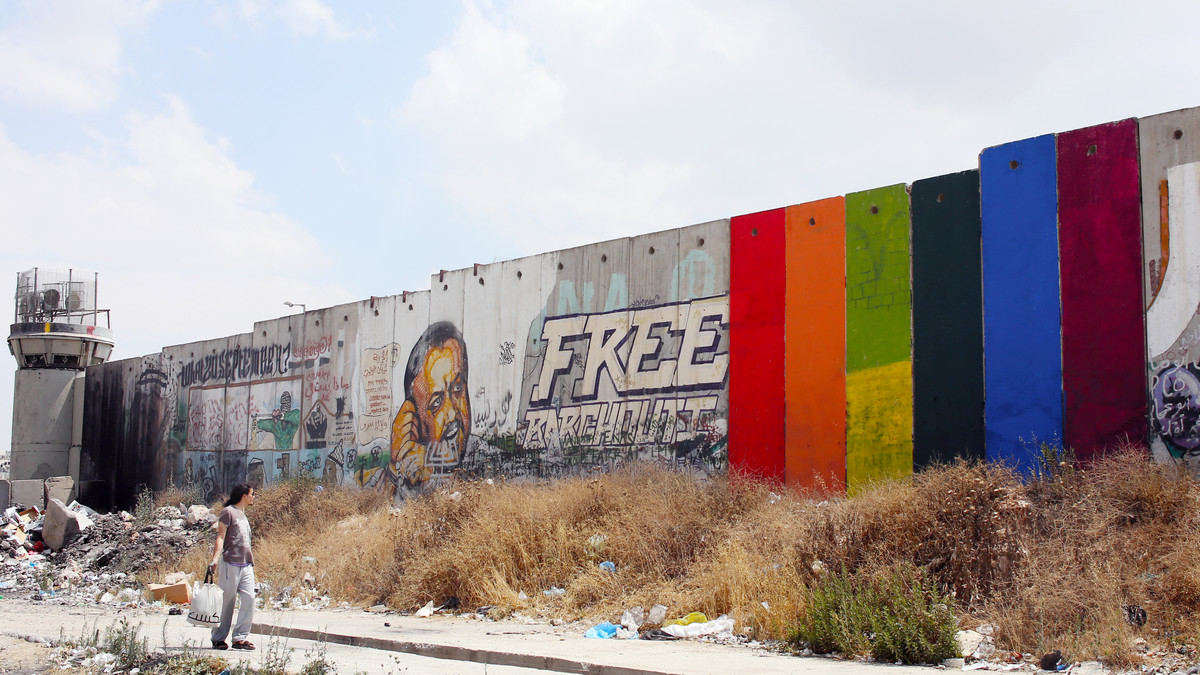
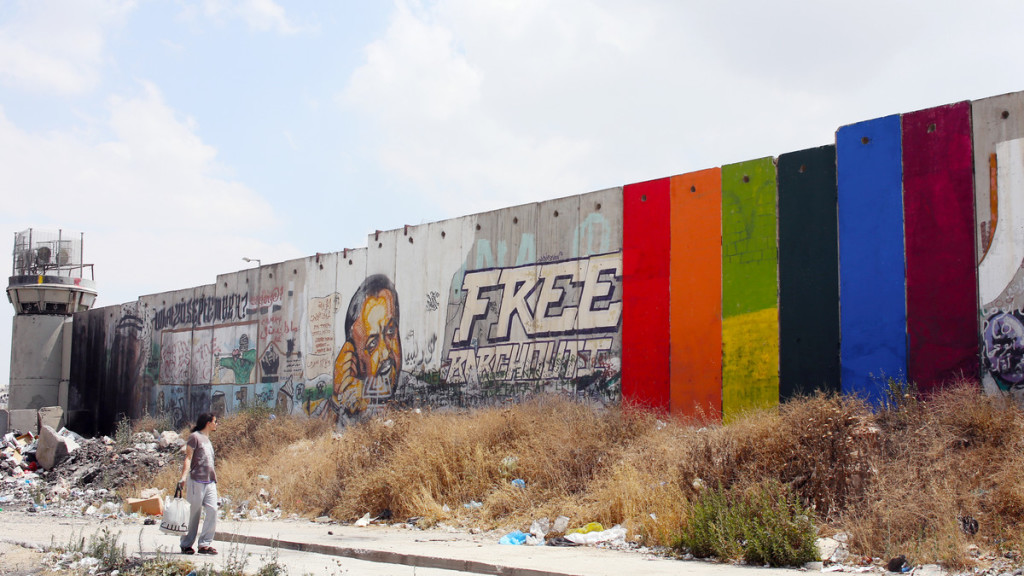
through_the_spectrum_2Khaled Jarrar’s rainbow mural “Through the Spectrum” painted on the Israeli separation wall near Qalandiya checkpoint in the occupied West Bank. (Khaled Jarrar)

Earlier this week, I painted a section of the Israeli apartheid wall near Qalandiya checkpoint in the occupied West Bank with the colors of the rainbow flag. Later that night, some people from the community painted it over.

As an artist, I usually prefer that my work speak for itself. But I feel that my intentions have been hijacked and manipulated, including by the Associated Press, whose report on the ensuing controversy was carried in publications all over the world, such as The Guardian and Haaretz.

So I felt it was time for me to address what happened in my own words. I painted the mural — which I titled “Through the Spectrum” — in broad daylight. Israeli occupation forces were not far away and Palestinians crossing back and forth through the checkpoint were all around.

In other words, life was “normal” in occupied Palestine, and the painting was executed in full view of passersby and local residents. Later the same day, news of my mural blew up on social media, and several Palestinians including a journalist seized on my action to encourage others to, ironically, go and save the racist Israeli wall from the “shame” I had brought on it.

A posting on Facebook used a photograph I had taken of the mural accompanied by the words “This filth will not see daylight. Tonight it will be painted over.” Following this incitement, and in the dark of night, a small group of Palestinian men whitewashed the rainbow.

Icon of oppression

Let me tell you what inspired my mural. Like people all over the world, I followed the news about the recent Supreme Court decision to legalize same-sex marriage in the United States. Millions of people, including many of my Facebook friends from Palestine and all over the world, used the “celebrate pride” filter provided by Facebook, to add a semi-transparent rainbow overlay to their profile pictures.

Everywhere, images of rainbows went viral and even the White House was lit up in rainbow colors.

This got me thinking about all these international activists and ordinary citizens who were celebrating freedom for a group of people who have historically been oppressed, and the use of the rainbow as a symbol of freedom and equality and what it could represent for other oppressed groups.

It also made me think of our daily struggles for equality, freedom and justice here in Palestine. While people in the United States celebrated, and I celebrate with them for their victory, we in Palestine are still divided from our own communities and families because of the racist and bigoted policies of Israel.

The apartheid wall, built in violation of international law, cuts across our land and our water. It divides farmers from their trees and crops, villages from cities, the faithful from their places of worship, parents from their children, children from their schools, and partners from one another. It stops people from getting married and living together and it destroys the possibility of living peacefully in an undivided country.

For 67 years, we have struggled together against Israeli ethnic cleansing, occupation and apartheid and this wall is just one — albeit very significant — barrier to our freedom.

I wanted the world to see that our struggle still exists and I felt there could be no better place to have that dialogue than on the concrete slabs of the most visible icon of our oppression.

I was heartened that the majority of Palestinians who contacted me as the controversy unfolded supported my actions. As the days passed, more and more of these voices became public and I have met many new people in my community who share the same love for freedom and our right to exercise our voices through creative means.

I also understand that the rainbow flag is a distinctive symbol often used for LGBTQ communities and has its own history and specific context. I am not shying away from any debate that our society should have by using these colors, but I believe the colors of the rainbow represent love, humanity and freedom. And yes, there were a minority who were confused by, or against, my actions. This minority was very vocal.

Whitewashing and pinkwashing

The whitewashing of the wall immediately brought the attention of world media. On 30 June, I spoke to the Associated Press and told them my intentions as I’ve written them here. I was dismayed when their article the next day used my action to anchor a narrative that highlights the alleged tolerance of Israel toward LGBTQ people, including Palestinians.

I felt that the entire story was hijacked by a pro-Israeli narrative that executed a “pinkwash” — essentially censoring what transpired, including my intentions. Pinkwashing is a form of distraction, using Israel’s supposedly gay-friendly policies as a smokescreen for the larger crimes of the occupation.

There was no mention of the outpouring of Palestinian support my action received and the complexities and diverse opinions that exist in our society as in others all over the world.

It claimed that Israel, because of its supposed tolerance, is a safe place for Palestinians who engage in same-sex relations, even though there are no laws that offer any sort of asylum to Palestinians in Israel and they are frequently subjected to particularly abusive treatment by Israeli authorities precisely because they are Palestinian. As the Israeli LGBTQ academic and activist Aeyal Gross has pointed out, the Israeli government is quick to exploit LGBTQ issues in its international propaganda while doing nothing to actively promote them at home.

As one astute observer noted on Facebook: “While the world celebrates gay marriage victory: in Israel, you can marry anyone as long she/he [is] not Palestinian.” That is true. In 2003, Israel passed a law, renewed every year since, that forbids its citizens from living in Israel with Palestinian spouses from the occupied West Bank and Gaza Strip, or from several Arab states.

When Israel’s high court upheld the law in 2012, Human Rights Watch condemned it for blatant discrimination.

“The law violates Israel’s obligations under the Convention on the Elimination of All Forms of Racial Discrimination, which applies not only to race but also to national or ethnic origin and among enumerated rights protects ‘the right to marriage and choice of spouse,’” the human rights group said.

Misinformation

While painting Israel as exceptionally LGBTQ-friendly, the Associated Press does concede that that “Officially there is still no same-sex marriage in Israel, primarily because there is no civil marriage of any kind.” What this means is that not only can’t Israelis marry Palestinians, but they can’t even marry each other unless they are from the same religion.

The Associated Press goes on to perpetuate another myth, claiming that a “1951 Jordanian law banning homosexual acts remains in effect in the West Bank, as does a ban in Gaza passed by British authorities in 1936.”

But this is incorrect. The Jordanian Penal Code of 1951 (amended in 1960) does operate in the West Bank, but as the international LGBTQ group ILGA notes in its latest annual report, the law contains “no prohibition on sexual acts between persons of the same sex.”

It is true, nonetheless, that questions of sexual practice as an identity and sexual relations between people of the same sex as well as of different sexes are matters of controversy, contestation and social strictures in Palestinian society as well as in Israeli Jewish society and all over the world.

To ignore all this and bolster the narrative of Palestinians as “backward” and Israelis as “progressive” is the very essence of pinkwashing. I strongly object to my work being used to fuel this sort of pro-Israeli propaganda.

It boils down to this: Israeli officials have boasted that 100,000 people attended the recent gay pride parade in Tel Aviv. But even if 100,000 of us Palestinians living in the occupied West Bank or Gaza Strip wanted to join that parade, we would have found the Israeli apartheid wall blocking our way.

I believe my role as an artist who often works in public spaces is to instigate dialogue. I stand behind my work — the colors on the apartheid wall added layers to other discussions depicted there that connect peoples and their struggles against oppression throughout history.

By subverting a symbol of freedom and self-determination to apply in broader contexts that include our own plight as Palestinians, I wanted to use the rainbow colors to open a passionate dialogue. While the work is now whitewashed, the debate continues.

I’m grateful to the many Palestinian journalists, artists, friends and others who are now reporting on the topic and the wonderful, complex conversations they are starting. I take heart from our ability to tackle difficult subjects and engage in an internal and international dialogue that breaks stereotypes that outsiders and even we Palestinians might hold about our society.

Khaled Jarrar is an acclaimed international artist who was born in Palestine and continues to live and work there. Having graduated from the International Academy of Art Palestine in 2011, his artwork and films capture highly symbolic ideas through photographs, videos and site-specific performative interventions focused on the plight of Palestinians. 

Source: Electronic Intifada

Response to Illegal block of Istanbul Pride 2015

Illegal Block of Istanbul Pride 2015

The Istanbul LGBTI Pride Parade has been held for thirteen years. Yet this year the Istanbul Governor’s Office blocked the parade, citing the fact that it coincided with Ramadan. The use of Ramadan, the Islamic month of fasting, as an excuse to curtail the freedoms of assembly, demonstration, and speech is a clear violation of rule of law. In taking this illegal decision, the Governor’s Office has thus broken the law.

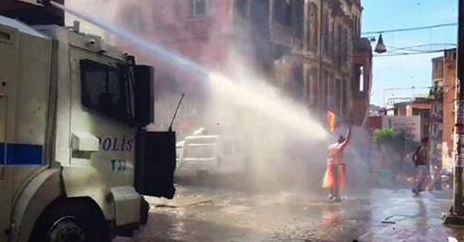
In applying the governor’s illegal order, law enforcement officials, too, became accomplices in a crime. They attacked tens of thousands of people with tear gas, riot-control vehicles, and plastic bullets, even though those people had come to assemble peacefully, just as they had last year. Law enforcement officials violated their legal obligations by carrying out the unconstitutional and illegal order handed down by the Istanbul governor’s office. Indeed, on the day of the attack, many police officers lacked helmets and registration numbers that would have helped identify them.

Moreover, the decision to block the parade because of Ramadan artificially inflames tensions by presenting LGBTI status and Muslim faith as if they were supposedly two opposing identities. It purposely ignores the fact that LGBTI individuals can come from all walks of life and aims to demonize them in the eyes of the wider public, preparing the ground for future attacks against LGBTI individuals. The government and the governor’s office will thus be held directly responsible for any attacks against LGBTI individuals that may be committed from this point on.

In a statement following the events, the Istanbul Governor’s Office stated that it had not received any notification about the parade and also that it had felt that certain groups were going to react violently to the parade.

First, if there was indeed credible information that an outside attack was to occur, it is the duty of the governor and of law enforcement to take measures to prevent such an attack, not to themselves attack the group exercising its right to assemble.

Second, Law No. 2911 on Assembly, Demonstrations, and Parades, as well as the relevant article of the constitution, are both entirely clear: Such assemblies are not subject to the prior permission of the governor’s office, nor is there even any obligation to notify the authorities. The 13th annual LGBTI Pride Parade planned for Sunday, 28 June in Taksim Square, was thus not in violation of any law. Moreover, after the parade itself was blocked, law enforcement continued to attack people gathered on the streets for hours. The streets and venues where the Pride Party was being held were attacked by police using gas canisters and plastic bullets long into the night. Such behavior on the part of the police goes beyond merely preventing an “unannounced” parade: It shows that this was an attack on our identities and our very existence.

Hundreds of people who came to participate in the parade were affected or harmed by the attacks, some with injuries serious enough to warrant hospital reports. We would like to take this opportunity to wish a speedy recovery to all of our friends and supporters who were victims of police violence on Sunday. For years, the state purposely ignored systematic violence being inflicted on LGBTI individuals and even reduced the punishments faced by perpetrators; now it is the state itself that has directly and physically attacked the existence of LGBTI individuals in Turkey.

Furthermore, we fail to understand how the same government that assured the United Nations on Friday (26 June) that it would protect LGBTI rights could on Sunday (28 June) go and attack the 13th annual Istanbul LGBTI Pride Parade without providing a legal justification. At the UN meeting on Friday, Turkey approved Norway’s proposal that “Turkey should carry out its human-rights obligations by ensuring that LGBTI individuals and non-governmental organizations are included in the process.” It also declared that it would carry out all proposals approved within the framework of the United Nations. A mere two days later, however, the government acted in violation of these proposals.

We repeat: We were here before, we are here now, and we will always be here!

Turkey has held an LGBTI Pride Parade for thirteen years. It is just one of the many activities of Istanbul LGBTI Pride Week in late June, which has been held for 23 years to mark the anniversary of the 1969 Stonewall Riots. It will continue to take place next year and every year thereafter. We will persist in our struggle for existence regardless of the government in power. We will continue to resist all forms of oppression, as we have for years.

We’re here to stay, so get used to it!

At 12:30 on Thursday, 2 July, we will file an official criminal complaint at the Çağlayan Courthouse in Istanbul against Interior Minister Sebahattin Öztürk, Istanbul Governor Vasip Şahin, and Istanbul Police Chief Selami Altınok for their role in ordering the attacks on the 13th Annual Istanbul LGBTI Pride Parade. We call on all political parties, labor unions, the democratically minded Turkish public, and international non-governmental organizations to come and express their solidarity with our cause.

Istanbul LGBTI Pride Week Committee

Reposted from: SPOD

WAO Reveals 2015 Domestic Violence Report & Launches Public Education Campaign “Can You Keep A Secret?”

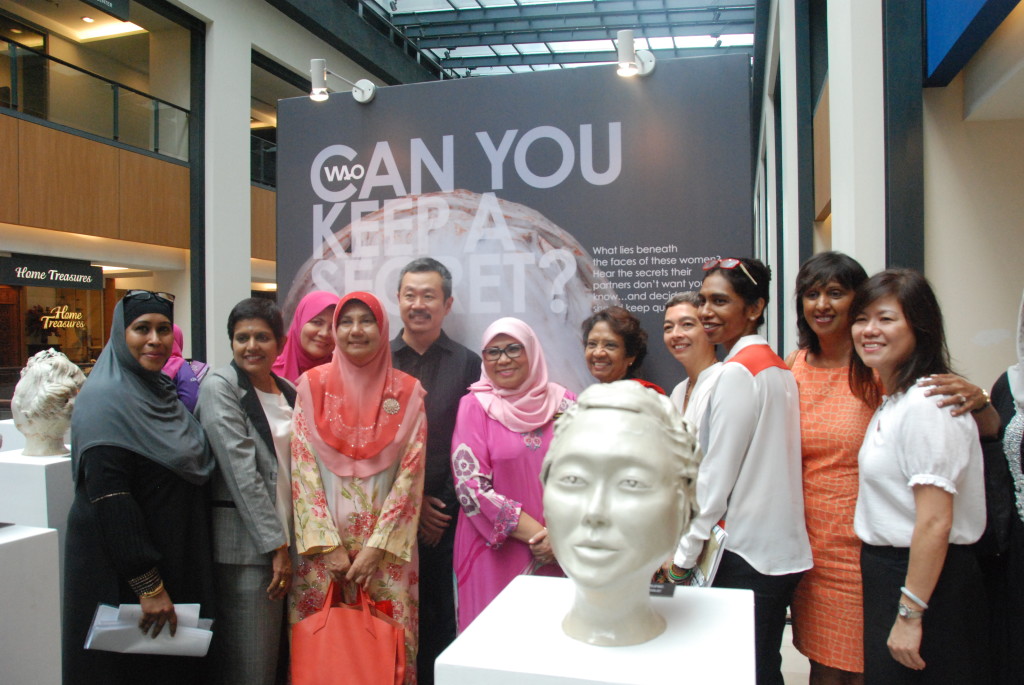
WAO Launch 'Can You Keep A Secret'


Kuala Lumpur, 23 June 2015
– Women’s Aid Organisation (WAO) revealed their annual “Working Together: Case Studies in Domestic Violence Response, 2015 Report”, simultaneously launching their public education campaign with a ceramic art installation entitled, “Can You Keep A Secret?” in collaboration with Leo Burnett/ Arc Worldwide Malaysia today in Publika. The launch was officiated by the Minister of Women, Family and Community Development, YB Dato’ Sri Rohani Abdul Karim.

The report details the experiences of domestic abuse survivors and the challenges they faced in obtaining protection and justice. WAO also compiled a comprehensive list of recommendations directed towards relevant government authorities.

“Can You Keep a Secret?” is aimed at raising awareness on domestic violence and will be onWAO 2015 Report Working Togetherdisplay at the Blue Bridge on Level G3 of Publika, featuring live-size ceramic head sculptures representing everyday women who could be victims of abuse. The twelve ceramic heads feature different stories of domestic violence survivors, drawing the public’s attention and urging them to speak out when it matters most – when they notice abuse.
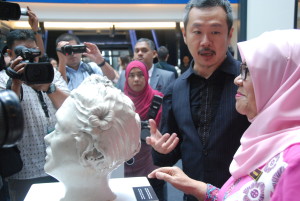
Artist James Seet from Leo Burnett/ Arc Worldwide Malaysia volunteered his time and skills to create the sculptures as it was an issue he strongly wanted to champion. Ceramic art was used to mirror real stories of survivors, representing the fragility of abused victims. Masking their internal emotions with a strong façade, victims develop deep mental and emotional scars that affect their wellbeing,“ Seet said.

“In line with Leo Burnett’s Humankind philosophy of creating work that influences behaviour, we hope to be able to bring the severity of domestic violence to attention through this art installation. This issue will not resolve overnight, but with the little exposure and education on this topic, we hope to encourage Malaysians to take action when they come across domestic violence,” James added.

“The Ministry of Women, Family and Community Development prioritises women’s rights, and is working towards achieving gender equality. Malaysia is committed to our obligations to Convention on the Elimination of All Forms of Discrimination against Women (CEDAW). The Ministry strongly supports efforts by government and non-governmental agencies to assist survivors of domestic violence,” the Minister stressed.

WAO Launch "Can You Keep A Secret?" 2The Minister also noted that there were strengths and weaknesses in the response system for domestic violence survivors, which the report points out. The Minister added that her Ministry would “consider all suggestions and recommendations that WAO has raised in the report to better address domestic violence.”
Sumitra Visvanathan, Executive Director of WAO, emphasised the importance of multi-stakeholder collaboration in addressing domestic violence. She stated, “All relevant bodies, including non-governmental organisations (NGOs) and government agencies such as hospitals and the police must work together to improve our response to domestic violence and continue to ensure that victim-survivors have access to the crucial support and assistance that we collectively provide.”

The report highlights the key role of police as first-responders in most domestic violence cases. From the 110 victim-survivors surveyed, 68 (61.8%) of them sought help from the police before anyone else.

“The police play a vital role in domestic violence response. It is exceedingly important that officers receive proper support and training to deal with these cases,” Visvanathan further commented.

Another highlight in the report is breakthrough developments in the courts where domestic violence cases are tried. For example, a victim impact statement (VIS) was successfully used in convicting a perpetrator. In another case, the perpetrator was successfully jailed for breaching a protection order, a first in Malaysia.

WAO Vice-President Tashia Peterson said at the launch, “Domestic violence must not be seen as normal; women have the right to a life free from violence. We want the public to recognise that and realise that we all have a part to play in ending domestic violence.”

“We would also like to thank Leo Burnett/ Arc Worldwide Malaysia for helping to make our campaign a success,as well as the office of Datuk Paul Low Seng Kuan, Minister in the Prime Minister’s Department, and Brickfields Asia College (BAC) for their generous support towards publishing the report. Thank you as well to Publika for providing us the space to conduct these initiatives,” she added. `

The art installation will be on display in Publika, on the Blue Bridge on Level G3, until the 22nd of July. It will then exhibited in other locations.

The report is available for download at bit.ly/WAOreport.

Women’s Aid Organisation (WAO) provides temporary shelter, social work and counselling services for domestic violence survivors and advocates for women’s human rights. Call our counselling line at 03 7956 3488 or SMS TINA at 018 988 8058 if you or someone you know is experiencing abuse. Together, we change lives.

For more information, contact: Kristine Yap, kristine.wao@gmail.com


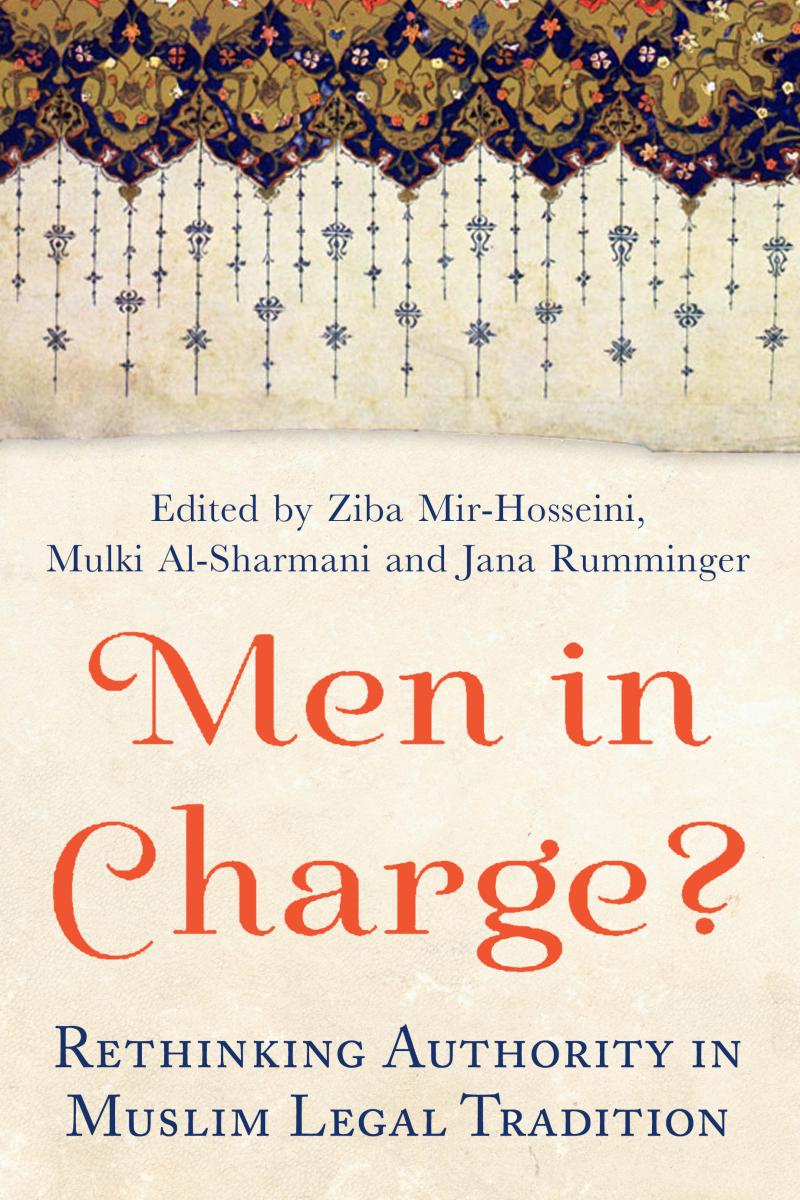
Men in Charge? Rethinking Authority in Muslim Legal Tradition

Men in Charge? Front Cover
In April 2015, MUSAWAH–the global movement for equality in the Muslim family–launched an exciting new book which “shows that the assumption that God gave men authority over women is a theological fiction that became a legal fiction, whose main function now is to sustain gender inequality.” [1]

SYNOPSIS

Muslim legal tradition does not treat men and women equally. At the root of this discrimination lies a theological assumption: God has given men authority over women. This assumption is justified with reference to a Qur’anic verse (4:34) and is expressed in two key legal concepts that underlie the logic of most contemporary Muslim family laws. One, qiwamah, generally denotes a husband’s authority over his wife. The other, wilayah, refers to the right and duty of male family members to exercise guardianship over female members and the privileging of fathers over mothers in guardianship of their children.

Based on exciting new feminist research, Men in Charge? critically engages with this assumption and challenges male authority and gender discrimination from within the Muslim legal tradition. The authors trace how male dominance came to be inherent in the tradition, show how it is produced and sustained in contemporary times, and indicate how the tradition can be reformed in order to promote gender equality and justice.

The contributors are academics and activists from varied disciplines and backgrounds who were brought together by Musawah. Since its launch in 2009, Musawah has sought to produce new knowledge to support local and national movements as they develop and advocate for change.

Summaries of the chapters are available on MUSAWAH’s site here, and insights on the processes behind the book by editor Ziba Mir-Hosseini can be read on Open Democracy here.

KOHL – A Journal for Body and Gender Research, Vol. 1

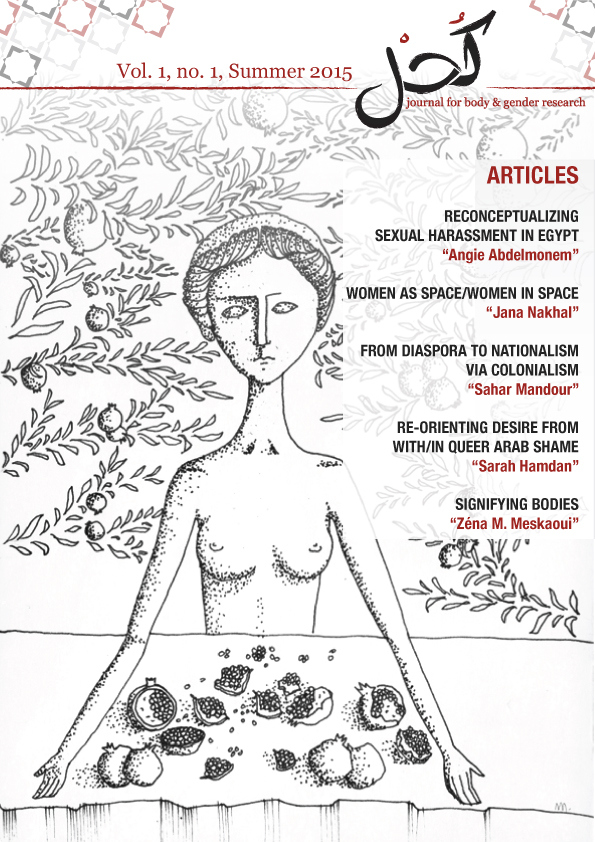
KOHLIssue-1-cover


The first volume of Kohl: a Journal for Body and Gender Research كحل: مجلة لأبحاث الجسد و الجندر is available in English here. Arabic version coming soon.


About Kohl:  
Kohl: a Journal for Body and Gender Research كحل: مجلة لأبحاث الجسد و الجندر is a progressive, new journal on gender and sexuality in the Middle East, South West Asia and North Africa region. Kohl is a biannual, multilingual, open access, and peer-reviewed academic journal. It targets mainly, but not exclusively, graduate-level academics, fresh graduates, independent writers, activists, and researchers who are not affiliated with an academic institution. [1]


Rethinking Intersections: A MENA-centred Definition of Gender and Sexuality (Vol. 1): Table of Contents

Rethinking Intersections, Rethinking Contexts: Writing in Times of Dissent (Editorial) – Ghiwa Sayegh

Feminism as a Moral Imperative in a Globalised World (Commentary) – Arianne Shahvisi

Women as Space/Women in Space: Relocating our Bodies and Rewriting Gender in Space – Jana Nakhal

Reconceptualizing Sexual Harassment in Egypt: A Longitudinal Assessment of el-Taharrush el-Ginsy in Arabic Online Forums and Anti-Sexual Harassment Activism – Angie Abdelmonem

From Diaspora to Nationalism via Colonialism: The Jewish “Memory” Whitened, Israelized, Pinkwashed, and De-Queered – Sahar Mandour

Re-Orienting Desire from With/In Queer Arab Shame: Conceptualizing Queer Arab Subjectivities through Sexual Difference Theory in a Reading of Bareed Mista3jil – Sarah Hamdan

Signifying Bodies: Artistic Representations of Embodiments in the Works of Samir Khaddaje, Rabih Mroué and Lina Saneh – Zéna M. Meskaoui

Pinkwashing: Israel’s International Strategy and Internal Agenda (Testimony) – Ghadir Shafie

Women’s Rights in Iraq: Old and New Challenges (Testimony) – Ilham Hammadi

A Political Movement in Lebanon? A Conversation on Feminism and Queerness (Openings) – Sanaa H.

The Bill on Fighting Violence against Women in Morocco: Anything new? (Resource) – Anass Sadoun


Call for Submissions for Vol. 2

The deadline to apply for submissions for volume 2, “The Non-Exotic Erotic: Questions of Desire and Representation”, has been extended to 2 August 2015. Find out more here.


Ensuring Women and Girls’ Sexual and Reproductive Health and Reproductive Rights in the Post-2015 Agenda

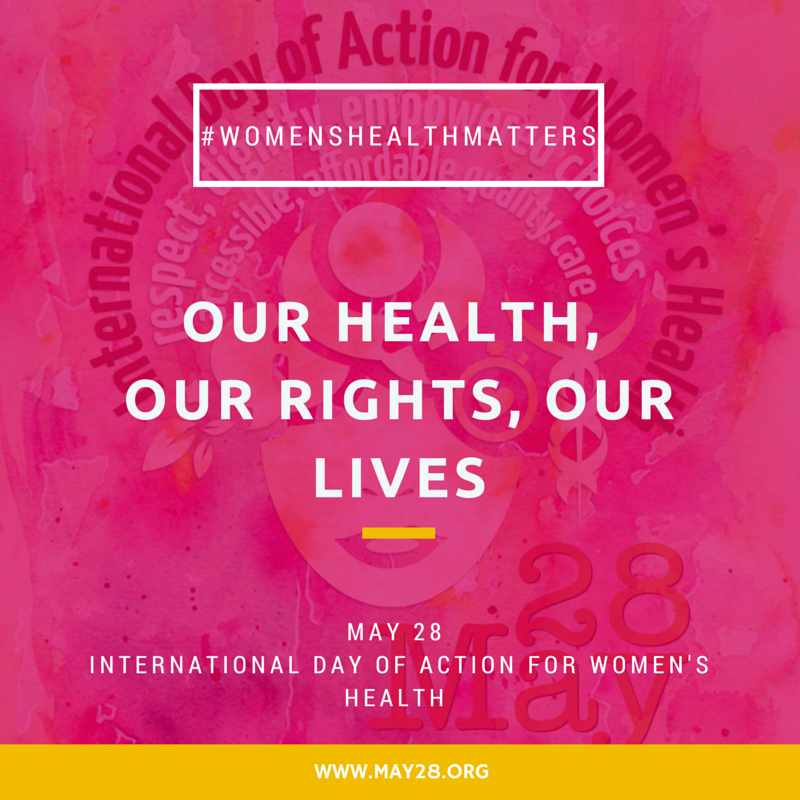
This 28 May 2015, on the international day for action on women’s health, the Women’s Global May-28-slogan-finalNetwork for Reproductive Rights (WNGRR) and partners launched a Call to Action to ensure that women and girls’ sexual and reproductive health rights are included within the Post-2105 agenda.

The action called on governments worldwide to respect, protect, and fulfill women’s right to health, dignity and bodily integrity, and end violence against women in ALL its forms, including the one form of violence particularly experienced by women and girls if they are young, unmarried, poor, HIV affected, of diverse sexual orientations or gender identities, living with a disability, or in other vulnerable situations, that remains rampant and unaddressed: namely, the institutional violence they experience when they are denied their right to health and are unable to access sexual and reproductive health services. 

“Institutional violence,” or violence perpetrated by the State, has traditionally been understood as largely occurring within extreme circumstances of conflicts, disasters, and economic crises.[3] As defined by the 1993 UN Declaration on the Elimination of Violence Against Women, however, violence against women includes “physical, sexual and psychological violence perpetrated or condoned by the State or its agents regardless of where it occurs.”[4] With this definition in mind, examples of violence and discrimination resulting from the violation of women’s right to sexual and reproductive health are far too common and widespread, such as:

  •  The denial of the right to access safe and legal abortion services, thereby forcing women through restrictive abortion laws to carry to term an unwanted pregnancy, even if it puts their health and life at risk, or even in cases of rape or incest, subjecting them to cruel, inhuman and degrading treatment, particularly if women are then criminalized and incarcerated;
  • Forced or coerced sterilization or abortion, as all too often experienced by women living with HIV, women living with disabilities, individuals of diverse SOGI, among others;
  • Obstetric violence, discrimination and denial of medical care to pregnant women, particularly if they are single and/or unmarried, forcing them to go through their pregnancy and/or labour in unsafe and life-threatening conditions;
  • The denial of young people’s access to comprehensive SRH services, particularly in the form of denying access to emergency contraception even in cases of rape, thereby subjecting young women and girls to forced teenage pregnancy and exacerbating the violence they already experienced.

While these examples may seem extreme, they happen all too frequently, and share a common root cause: namely, the denial of women’s right to sexual and reproductive health, and the denial of women and girls’ right to exercise autonomous decision-making over their bodies and their lives. The denial of these rights results in violence against women[5] and in some cases results in cruel, inhuman, and degrading treatment paramount to torture, as recognized by Human Rights Bodies.[6]
As a follow-up to the action, WNGRR submitted a letter to the delegates of 58 UN Member States who delivered a joint statement in support of SRHR at the OWG13 session.

See the original call to action here: http://www.may28.org/call-to-action/, and the final letter to UN delegates endorsed by 177 organizations and 290 individuals worldwide here.


WLUML condemns the harassment of Sri Lankan activist Sharmila Seyyid

Statement of Solidarity CSBR

Women Living Under Muslim Laws (WLUML) condemns the backlash faced by Sri Lankan Human Rights Defender, Sharmila Seyyid, and calls for her security and freedom to be guaranteed.

In November 2012, Ms. Sharmia Seyyid stated during a radio interview with the Tamil Rado Service of the BBC that the suffering of sex workers would be alleviated if prostitution was legalized.

Severe backlash from the Muslim community has since ensued; Seyyid has been accused of being a heretic, of disobeying the tenets of Islam, has received death threats, and has had her English academy attacked by arsonists. Persecutors have used social media to intimidate Seyyid, which has involved sexualized harassment, and threats of violence and death.  The harassment has resulted in her fleeing the country, and it continues to this day, having also affected other family members.

Ms. Seyyid is a poet, novelist, journalist, social worker and single mother from Eravur, a largely Hindu Tamil province in eastern Sri Lanka. She is an active Woman Human Rights Defender who has been doing valuable social work related to women’s issues in the Batticaloa District and has worked closely with minority women in the East. In 2009, she founded the Organization for Social Development, a community-based organization in Eravur, to help address post-war women’s issues.

Sharmila Seyyid’s exposure to physical and online threats is intolerable, and just another example of the particular persecution WHRDs face for daring to speak up.

Her persecution follows a climate of increasing influence of Wahhabist strands of Islam in Sri Lanka, which is yet to recover after the protracted civil war and ethnic conflict. Non state forces are pushing an overarching majoritarian ideology and hampering the initiatives of the few civil organisations trying to forge inter-ethnic cohesion and citizen rights. These growing influences have contributed to an increase in intra-religious tensions.  Notably, the resulting homogenizing trends of the ‘Muslim identity’ have also curtailed Muslim women’s freedoms in the name of ‘tradition, religion and culture.’

The backlash Ms. Seyyid is experiences is an example of the harassment that activists face when speaking up about social realities.

WLUML strongly believes that Ms. Seyyid has every right to express her views without facing such damaging repercussions. 

We heavily condemn all forms of persecution and harassment and are gravely concerned for her safety. Ms. Seyyid, like many WHRDs around the world, has been victim of the fundamentalist backlash that strongly hampers women’s entry into the public sphere, their political participation, and their freedom to express dissenting views. The defaming, hatred, and threats against a person, particularly a woman, for having a particular opinion is unacceptable.

We support Sri Lanka’s civil society leaders in urging the Sri Lankan authorities, community religious leaders, and civil society actors of the Muslim community to halt the targeting of fellow Muslims and all fellow citizens, to encourage a safer, fairer society, and to actively strive to uphold citizen rights. We urge the Sri Lankan authorities to ensure that investigations will be carried out against those who caused the misconduct and that justice will be meted.


If you would like to support this statement as an organisation or an individual, please email ifra@wluml.org.

This statement is supported by:

The Association for Women’s Rights in Development (AWID)
Emilia Novo
Faizun Zackariya, Muslim Women’s Research and Action Front (MWRAF), Sri Lanka
Sally Armstrong, Journalist, Canada
Urgent Action Fund for Women’s Human Rights
Gita Sahgal, Centre for Secular Space, UK
Women’s Action Network Sri Lanka
Shreen Abdul Saroor, Mannar Women’s Development Federation, Sri Lanka
The Coalition for Sexual and Bodily Rights in Muslim Societies (CSBR)
PILIPINA Legal Resources Center, The Philippines
Matthew Abely, student teacher, San Jose, CA, USA