|
|||
|
For more information, visit alQaws website
|
|||
|
For more information, visit alQaws website
Publication Date:
Abstract
A survey, conducted by the PILIPINA Legal Resources Center (PLRC) in the Philippines, on the extent of usage of, and the attitudes, aspirations and behavior of Muslim women in relation to the Code of Muslim Personal Laws (CMPL) found that the majority of Muslim women were not familiar with their official legal rights. The solution to the problem of lack of legal literacy is easy. The greater problem, as the survey indicated, is that women’s lack of autonomy is largely cultural, and justified by invoking customary laws and religious traditions. This worldview affects the individual’s ability to participate in every level of social life—from decision making within her home and family, to education, employment and public office. This chapter will discuss the implications of this research and what outreach projects have been implemented (including engagement with the UN Cedaw Committee) since it was undertaken, to overcome the problems revealed concerning Muslim women’s understanding of their legal rights in the Philippines.
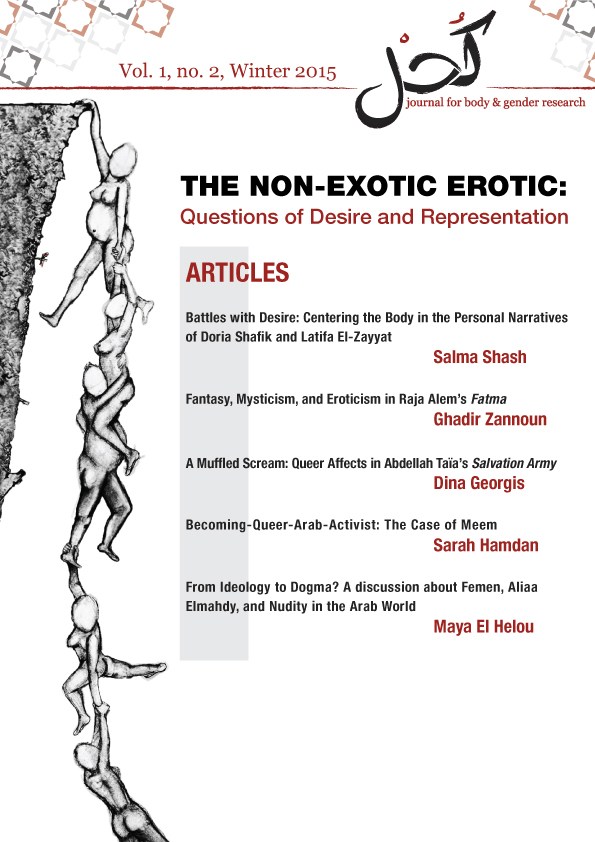
THE NON-EXOTIC EROTIC
Questions of Desire and Representation
The Erotic, the Exotic, and the Space(s) in Between: The Race for Feminist Waves
Ghiwa Sayegh
Kohl 1.2: pp. 1-5
Curse Words: The Language of (Hetero)Intimacy
Cynthia El Khoury
Kohl 1.2: pp. 6-10
The Hystory of My Vagina: A Manifesto
Lady Gya
Kohl 1.2: pp. 11-16
Of Periods, Bodies, and Desire:
A Discussion on the Erotic Image in Artistic Representations
Rebecca Saab Saadeh
Kohl 1.2: pp. 17-25
Sex Tourism and the Military in Biomythographic Performances: An Interview with Jessika Khazrik
Ghiwa Sayegh
Kohl 1.2: pp. 26-30
Battles with Desire:
Centering the Body in the Personal Narratives of Doria Shafik and Latifa El-Zayyat
Salma Shash
Kohl 1.2: pp. 31-43
Fantasy, Mysticism, and Eroticism in Raja Alem’s Fatma
Ghadir K. Zannoun
Kohl 1.2: pp. 44-55
A Muffled Scream: Queer Affects in Abdellah Taïa’s Salvation Army
Dina Georgis
Kohl 1.2: pp. 56-65
Becoming-Queer-Arab-Activist: The Case of Meem
Sarah Hamdan
Kohl 1.2: pp. 66-82
From Ideology to Dogma?
A discussion about Femen, Aliaa Elmahdy, and Nudity in the Arab World
Maya El Helou
Kohl 1.2: pp. 83-92
One Is Not Born, But Rather Becomes, Joumana
Sanaa Khoury
Kohl 1.2: pp. 93-97
Genre et éducation sexuelle dans le système éducatif marocain
Zouhair Gassim
Kohl 1.2: pp. 98-107
Reposted from: Kohl
2 January 2016
 PAS’s ulama council information chief has made a mockery of Islam with his suggestion that marriage would solve a high percentage of underage rape cases in the country, Sisters in Islam (SIS) said today.
The non-governmental organisation for Muslim women’s rights said Datuk Dr Mohd Khairuddin Aman Razali’s statement on Facebook recently was appalling and erroneous.
“Islam does not allow for underage marriages, especially if it is to the perpetrator himself, i.e the underage girl’s rapist.
“As a Member of Parliament, it is shocking that YB Khairuddin would undermine the severity and emotional trauma experienced by victims of underage rape cases,” SIS said, in reference to the Kuala Nerus MP’s Facebook post on Wednesday.
Khairuddin had also been reported in the media as saying marriage was the “most potent medicine in Islam to curb the social ill.”
“Society, specifically parents, must encourage and facilitate the marriage of their children.
“While the government must help provide incentives to lessen the burden of couples planning to get married,” he reportedly said.
The PAS lawmaker had been commenting on sexual crime statistics from Bukit Aman that showed 920 out of 1,794 cases reported this year involved statutory rape.
Khairuddin also claimed that 90% of the statutory rape cases were “suka sama suka” (consensual).
SIS considered this remark by Khairuddin to be irresponsible and misleading.
“Rape can never be consensual even if an underage girl does not explicitly say no, thus the term ‘statutory rape’.
“It is time we view rape as a crime that it actually is and a violation of human rights.
“Rape is a despicable act that is sinful in Islam and cannot be awarded with marriage.”
SIS added that Malaysia, as a signatory to the Convention of Elimination of all forms of Discrimination Against Women (CEDAW) and Child Rights Convention (CRC), had an obligation to ensure underage girls get access to higher education and achieve their potential, instead of allowing child marriages as a solution to statutory rape.
Reposted from: The Malaysian Insider
Other sources: Malaysia Kini, The Star Online
23 December 2016
The life of a Sri Lankan maid due to be stoned to death in Saudi Arabia for adultery has been spared, Sri Lanka’s foreign ministry says.
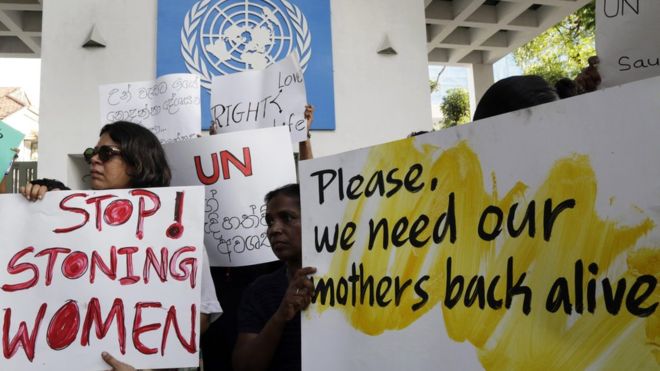
She will instead be imprisoned, Sri Lankan Deputy Foreign Minister Dr Harsha de Silva announced. An appeal by Sri Lanka was considered by Saudi Arabia and the execution order was withdrawn, he said.
The woman was convicted in August, along with an unmarried Sri Lankan man. She was sentenced to death by stoning, while the man was sentenced to 100 lashes. Saudi Arabia agreed to reopen the case of the woman – a 45-year-old mother of two – earlier this month.
There was no immediate comment in Saudi state media on the news the woman had been spared.
Sri Lankan indignation
Saudi Arabia’s initial decision to stone the woman was condemned in Sri Lanka. Government official Ranjan Ramanayake said the Sri Lankan government had been informed about the woman’s case only after she had been convicted – despite the fact she had been arrested in April 2014.
“Islamic Sharia law says four respected Muslims need to be eyewitnesses for this type of case, but this has not been possible in this case,” he said. “Unfortunately, not knowing the law, she has confessed under pressure without any legal help.”
The case sparked protests in November outside the UN compound and the Saudi embassy in Sri Lanka’s capital, Colombo – with some calling for a ban on sending Sri Lankan workers to Saudi Arabia.
The Sri Lankan government says it is gradually reducing the number of women sent to work in the Middle East.
Repsoted from: BBC
This video, created by Institute for Women’s Empowerment, tells the story of the struggles of Najma Milla and her husband Nurul to establish an Islamic boarding school (pesantren) which is at the same time a public school, rather than being solely based on religion. This model of boarding-cum-public school did not previously exist in Wringin Sukowono Village (Jember District, East Java).
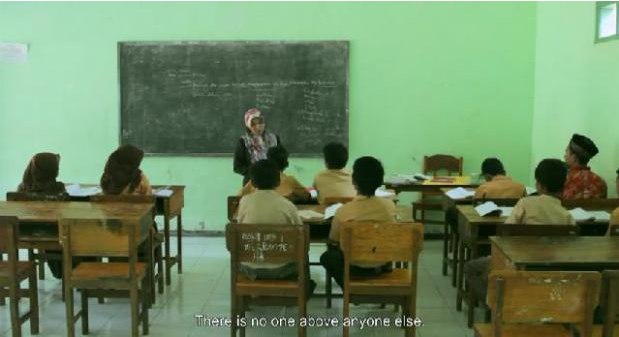
Najma Milla is an alumna of RAHIMA in Indonesia, and is featured in this film as a truly innovative and successful feminist leader in her community.
3 December 2015
185 Civil Society activists and 40 organisations have today urged the respective authorities to take all possible measures to revoke the death sentence and ensure the migrant worker’s safe return to Sri Lanka.
A 45 year old, unnamed Sri Lankan migrant domestic worker and mother of 4 has been sentenced to death by stoning in Saudi Arabia for ‘adultery.’
We publish below the statement in full;
Death Sentence Imposed on a Sri Lankan Migrant Worker in Saudi Arabia
We the undersigned express our deep dismay and distress that as a yet unnamed Sri Lankan housemaid living in Saudi Arabia has been found guilty of adultery and has been sentenced to death by stoning.
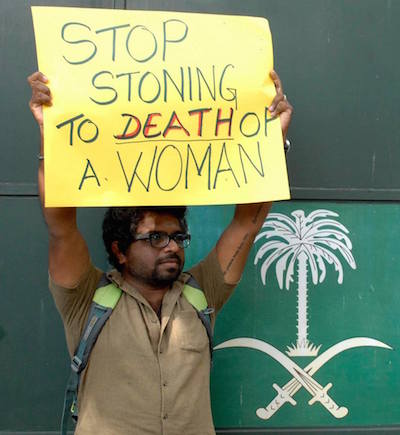 According to newspaper reports, a court in Riyadh sentenced the woman, reportedly a mother of two, based on her confession. The male worker involved in the case who has been found guilty of fornication (as he is not married) has been given a sentence of 100 lashes. Little is known of the circumstances of the case; generally these cases are difficult to prove as it must be corroborated by four male witnesses or eight female witnesses. However since the woman pleaded guilty the case has been exempted from this standard of proof.
In response to the conviction, the Sri Lanka Bureau of Foreign Employment (SLBFE) and the Ministry of Foreign Employment has expressed concern and instructed the Sri Lankan Embassy in Saudi Arabia to take all steps to save the convicted woman. The SLBFE has hired a lawyer to appear on behalf of the woman in order to obtain a revocation of the death sentence. Minister Thalatha Athukorale has however noted that this would be an uphill task given that the woman has confessed to the offence.
This is the second instance that a Sri Lankan housemaid has been given the death sentence. PreviouslyRizana Nafeek was beheaded on 9th January 2013 for the alleged murder of a four-month old baby boy. Nafeek’s conviction was also based on a confession, which she later claimed was made under duress and without linguistic assistance. Following a case which dragged on for five years and despite appeals made by the government of Sri Lanka and international and local women’s and human rights organisations, the Saudi government went ahead with her execution in January 2013.
According to Amnesty International, Saudi Arabia is amongst the top three countries that implement the death penalty and the majority of those who are executed are foreign nationals convicted for non-lethal crimes such as adultery, apostasy, sorcery and witchcraft.
We appeal to THE RESPECTIVE AUTHORITIES TO take all possible measures to revoke the death sentence and ensure the migrant worker’s safe return to Sri Lanka. We EARNESTLY call on you to expeditiously bring to bear all possible means to ensure that the migrant worker is granted justice. We further call on you to ensure that Sri Lankan migrant workers are granted all possible support and protection to ensure their human rights.
Sincerely
Action Network for Migrant Workers (ACTFORM)
Centre for Policy Alternatives
Centre for Social Concerns, Jaela
Ceylon Workers Red Flag Union
Citizens Voice for Justice and Peace
Domestic Workers Union
Families of the Disappeared
Kantha Shakthi Forum
Lanka Estate Workers Union
United Federation of Labour
Lawyers Collective for democracy
Muslim Women’s Research and Action Forum
Red Flag Women’s Movement
Rights Now
Rural Women’s Front, Galle
Savisthri Women’s Movement for Justice
Sri Lanka Women’s NGO Forum (SLWNGOF)
Suriya Women’s Development Centre, Batticaloa
Trikone Cultural Centre
Woman’s Power
Women and Media Collective (WMC)
Women In Need
Women’s Resource Center, Kurunegala
Association for War Affected Women, Kandy
Christian Workers fellowship (CWF)Women Action Network, Jaffna
Future In Our Hands
The Grassrooted Trust
Coalition for Educational development
SAHODARATHWA SANSADAYA
Christian Alliance for Social Action (CASA)
Centre for Peacebuilding and Reconciliation
Inter Relligious Federation of Ampara District (IRFAD)
Al Minan Women’s Society – Kalmunai
Fathima Women’s Society – Central Camp
Nisha Women’s Society Kalmunai
Ambikai Women’s Society – Central Camp
Malar Villy Society Central Camp
Sivasakthi Women’s Society Central Camp
Ina Ottrumaikana Pengal Abiviruthy Ondriyam Central Camp
Women’s Political Academy
Amal Mohamed
Amita Weerasinghe
Ameena Hussein
Anberiya Hanifa
Ann Jabbar
Ainslie Joseph
Annie Kurian
Anoma Alankara
Anoma Manoranjani
Aparna Gurusinghe
Aasha
A.H.H.Aqila
Asma Jabir
Arafa Jaleel Khan
Azra Abdul Cader
Balachandran Gowthaman
Balasingham Skanthakumar
Bhavani Fonseka
Bhoomi Harendran
Britto Fernando
Camena Gunaratne
Chandani K.A Malagammana
Chandralal Colombage
Cayathri. D
Caryll Tozer
Chandrika Gadiewasam
Christine Perera
Chulani Kodikara
D.R.Jayathilake
David Gunaratnam
Damaris Wickremesekera
Deeptha Bandara
Dhammika Karunaratne
Dharmasiri Bandaranayake
Dinushika Dissanayake
Elanda Delwala
Faizun Zackariya
Fahrun Muthalif
Farzana Jaleel Khan
Florine Marzook
G.W.Padmaseeli
Gamini Ruberu
Gamini Viyangoda
Gehan Gunatilleke
Geethika Rupasinghe
Gratian A. Peiris
H.M. Subharatne Menike
Harini Amarasuriya
Hans Billimoria
Hilmy Ahamed
Hishama Matheen
Hemalatha
H.Nuwaiza
Hyshyama Hamin
Iman Mohamed
Indra Swarnaseeli
Inshira Laffir
Irina Jabir
Jagath Siriwardena
Dr. Jameel,
Jezima Ismail
Jailabdeen Shiam
Prof. Jayantha Seneviratne
K.A.Jayasinghe Perera
J. Madanaruby
Kalani Subasinghe
Kumudini Samuel
K.Nishanthini
K.Wijeyluxmy
K. Vinoja
K.L.M.Azeez
Fr Kirubairajah
Kusum Siriwardena
Lesley Sirimane
Leila Udayar
Lallani Kalupahans
Linus Jayathilaka
Dr L Solomons
Dinoo Mumthahana J.
M. Indrawathi
Mahendran Thiruvarangan
Maithree Wickramasinghe
Marisa de Silva
Mahinda Jayawardena
Mala Dissanayake
Mary Heather White
Menaha Kandasamy
Menike Wannisooriya
Melisha Yapa
Mirak Raheem
Mohamed Nuhman
Mujeebur Rahman
M.M.Jenita
M.S.Thevagowry
Nayagara Jinadasa
Nadira Salih
Neil Priyantha Fernando
Nimalka Fernando
Noorul Zaniha Jainulabdeen
N. Zairina Ariff
Nishani Punchihewa
Nirmalani Perera
Nimnaz Jabir
Padma Pushpakanthi
Paba Deshapriya
Pavithra Sajeevani
Philip Setunga
Piyumi Tharaka
Priyadarshanie Ariyaratne
Prabha Gurusinghe
P.Selvaratnam
Preethika Weerawansa
Premapala Hewabatage
Prema Gamage
Paul Hogan
Ranga Bandaranayake
Rajee Clerk
Ralston Weinman
Ramzeen Azeez
Rani Jayasinghe
Ranjani Mallika
Ratna Sandaseeli
Rajany. C.
Rev. Jason J. Selvaraja, Assembly of God, Chavakachcheri
Rev. M. V. E. Ravichandran, Jaffna Diocesan Catholic Youth Federation
Riyani
Rikaza Laffir
Rohini Dep Weerasinghe
Rohini Hensman
Roshani Fernandopulle
Ruki Fernando
Rushdi Zackariya
Ruwendi Wakwella
R.Logitha
S. Ananthi
S.G.Nishanthini
Sathyavani
Sandya Salgado
Savithri Wijesekera
Sepali Kottegoda
Selvi Sachithanandam
Shafinaz Hassendeen
Shreen Saroor
Sampath Samarakoon
S.A.M.Jabir
S. R. H. Hoole
S.Unesh Kunalan
Sheila Richards
Shirani Rathnaweera
Shiromi Pathirana
Sithy Nabeesa Deen
Shyamala Gomez
Shyamala Sivagurunathan
Shamini
Shafnaaz Harees
Silma Mohideen Ahamed
Sriyani Pathirage
Sriyanie Wijesundara
Sudarshana Gunawardene
Sunil Ranasinghe
Sumi Kerison
Supipi Jayawardena
Smriti Daniel
Shiranee Dissanayake
S. Rubiya
Tanuja Thurairajah
T. Chandramohan
Thiagi Piyadasa
Thilaka Liyanage
Thissanthini
U.P.M Pathirana
U.L.Hafeela
U.L.Sameena
U.L.Hassen
Udeni Thewarapperuma
Yasmin Azeez
Vasuki Jeyasankar
Vasanthagowri
Visaka Dharmadasa
Viola Perera
Visaka Bandaranayake
W.A. Dayani
Wasantha Dissanayake
Zuhri Zackariya
Zulfika Ismail
Reposted from: Colombo Telegraph
Qu’est ce le harcèlement sexuel ? C’est la question qui a été posée par des activistes de la société civile dans la rue aux passants et plusieurs d’entre eux n’ont pas su répondre…
Bien que le harcèlement soit un phénomène courant, toutes les personnes interrogées n’ont pas su répondre clairement à la question. Agressivité, embarras, hésitation… telles étaient les émotions recueillies dans la rue et diffusées lors de la rencontre ‘Un jour, un combat’, el 9 novembre au café théâtre Le Mondial.
Cette rencontre a été organisée par plusieurs composantes de la société civile dont l’ATFD, Chouf, Without Restrictions, Mawjoudin, le groupe Tawhida ben Cheikh, etc. Des composantes qui font partie de la coalition pour les droits sexuels et corporels dans les sociétés à majorité musulmane.
Tabou, le harcèlement sexuel est rarement abordé et quand on en parle, ce sont les femmes qui sont pointées du doigt dans nos sociétés. Elles sont culpabilisées parce que, pour une majorité de personnes, elles ont attiré le regard et la convoitise du harceleur. Le corps des femmes est chosifié et leur style vestimentaire ou leur comportement dans l’espace public est remis en question et jugé coupable quand elles subissent des violences.
Plusieurs interventions, des présents à l’événement ‘un jour, un combat’ ont tenu à rappeler que le harcèlement est une forme de violence sexuelle qui porte une atteinte morale à la victime et qu’il faut la différencier du viol et des autres formes de violences faites aux femmes et aux personnes LGBT.

« On doit d’abord clarifier ce que veut dire ‘harcèlement sexuel’ et ne pas le confondre avec la tentative de viol. Le harcèlement sexuel comme toutes les violences faites aux femmes est un acte par lequel l’auteur exerce une domination sur une femme ou une personne LGBT. L’auteur dit : je peux disposer de ton corps comme je veux et où je veux. Le harcèlement de rue aussi est une notion qui n’est pas claire : c’est un harcèlement sexuel qui s’exerce dans la rue. Il est important que nous utilisions des notions claires » a affirmé, Azza Ghanmi, militante féministe qui était présente à l’événement.
Dans le code pénal tunisien, le harcèlement sexuel est défini comme « gestes et paroles obscènes qui gênent l’autre »
Art-226 ter : Est considéré comme harcèlement sexuel toute persistance dans la gêne d’autrui par la répétition d’actes ou de paroles ou de gestes susceptibles de porter atteinte à sa dignité ou d’affecter sa pudeur, et ce, dans le but de l’amener à se soumettre à ses propres désirs sexuels ou aux désirs sexuels d’autrui, ou en exerçant sur lui des pressions de nature à affaiblir sa volonté de résister à ses désirs.
« C’est une définition vague qui pose un problème au juge lors de l’application de l’article» déclarait Hayet Jazzar, avocate et militante féministe.
Mais même si l’on s’accorde à dire que nous vivons aujourd’hui dans des sociétés arabes, masculines et patriarcales où le harcèlement sexuel dans la rue et l’espace public est une forme de domination et de discrimination envers les femmes, les sociétés occidentales ne sont pas en marge de ce phénomène. Un reportage diffusé montrait que 100% des femmes françaises qui prennent le métro ont été, harcelées au moins une fois.
Les acteurs du harcèlement dans tous les cas de figure sont des hommes et la victime ose rarement porter plainte.
Pour les militants des droits LGBT, se diriger vers un poste de police pour porter plainte est l’occasion de se faire humilier et de subir, probablement, d’autres formes de violences.
Aucun chiffre n’a été avancé lors de cette rencontre mais une esquisse de l’état des lieux du harcèlement de rue a été certainement ébauchée, car, aujourd’hui, l’on ose parler ouvertement des violences sexuelles à l’égard des femmes et des personnes LGBT.
Les solutions pour lutter contre ce phénomène ne sont peut-être pas évidentes pour le moment mais si on commençait par en parler ? Par identifier, définir et distinguer le phénomène mais surtout, par sensibiliser avec des spots et des campagnes ciblées qui représentent le harcèlement sexuel tel que vécu dans nos espaces publics et faire connaitre leurs droits aux victimes.
Il va sans dire qu’appliquer les lois et notamment la constitution tunisienne, comme l’a bien fait remarquer Hafidha Chekir est inévitable, car l’Etat est garant des droits (art-21) et s’engage à préserver les femmes contre les violences (art-46).
Voici plus de détails en vidéo:
Reposted from: TunisScope
UPDATE on 23 December 2015:
————————————————————-
UPDATE on 8 December 2015:
Excerpt from the Economy Next:
Saudi authorities have agreed to reopen the case of a Sri Lankan domestic worker sentenced to death by stoning for adultery, Deputy Foreign Minister Harsha de Silva told parliament Tuesday.
Sri Lankan diplomats met with the unidentified woman at a Saudi jail over the weekend and Colombo secured agreement to give her a fresh trial, the deputy minister said.
“Through our intervention, they (Saudi authorities) have agreed to reopen the case,” de Silva told parliament. “This can be considered a big victory. We will provide her with legal counsel.”
The woman, a 45-year-old married mother of two who has not been named, was convicted of adultery in August. She was sentenced to death by stoning, while an unmarried Sri Lankan man convicted alongside her was sentenced to 100 lashes.
Sri Lankan lawmakers from all parties have united in urging the government to secure clemency for the woman and a pardon for the man.
————————————————————-
Take Action Now!
https://secure.avaaz.org/en/petition/Saudi_Arabia_Stop_Stoning_Sri_Lankan_Domestic_Worker/
Why this is Important
According to the Muslim Women’s Research & Action Front Sri Lanka, a 45 year old, unnamed Sri Lankan migrant domestic worker and mother of 3 has been sentenced to death by stoning in Saudi Arabia for “adultery.” Zina – that is any sexual relations outside of marriage – are Hudud crimes or “crimes against God.”
The man in the alleged relationship who is single has been sentenced to 100 lashes for “fornication.”
We, the undersigned, condemn the death penalty and stoning or flogging, including for private sexual relations between consenting adults.
The state must not kill people for love.
The Saudi authorities must release the two and extradite them to their home country.
Sign: https://secure.avaaz.org/en/petition/Saudi_Arabia_Stop_Stoning_Sri_Lankan_Domestic_Worker/
More information here: https://www.colombotelegraph.com/index.php/take-all-possible-measures-to-revoke-death-sentence-on-sri-lankan-domestic-worker-csos-tell-govt/
As part of the One Day, One Struggle, a global campaign by members of the Coalition of Sexual & Bodily Rights in Muslim Societies (CSBR), Drag It to the Top in Pakistan, organized a focused group discussion on indigenous responses to homonationalism in Pakistan and Sweden and exploring the importance of politics of feminist transnational solidarity in the wake of cultural wars on human rights by terrorist groups ISIL and Al-Qaeda and the resulting threat of Islamophobia against queer Muslims living in war-torn areas and the explosion in refugee populations migrating to the West for asylum.
The discussion was held at Lahore’s Books n Beans café, a highly popular and cordial environment for activists and intellectuals to get together and share issues of common interest over coffee and a diverse range of affordably priced books.
There were 15 people in attendance including Pakistani representatives of esteemed academic institutions, multinational
corporations, art and history collectives and not-for-profit organizations in Lahore that were joined by academic researchers from Sweden. The format of the discussion involved sensitization on local and standardized terms on queer sexuality which was then extended to understand the implications of homonationalism in the Indo-Pak Sub-Continent as well as internationally.
It was no surprise to see the debate kicking off with the question “how is homonationalism relevant to Pakistan? You have to have a state-sanctioned movement for LGBT rights and it doesn’t apply to our context so far,” says Hadi Hussain, a lecturer of psychology at the Department of Gender Studies at Punjab University, Lahore. Hadi was one of the first Pakistani academic to write a retaliatory feature in the media condemning the US embassy Pride celebrations held in Islamabad in 2010.
Sharing his initial responses to homonationalism, Abdullah Qureshi, arts consultant for the British Council in Lahore said, “I provide therapy in solidarity meetings for homosexual men from different backgrounds. For someone, who was born privileged and exposed to Western education and went to the West to study, I’ve never questioned my identity. In fact I’ve always felt comfortable with it. At the same time, I cannot accept any critiques or labels on my identity or someone telling me that I need a boyfriend because I’m gay. I’ve never identified with my sexual orientation due to a long history of abuse. The point is that it is very interesting that we have these indigenous queer identities where there is actually no such categorization. We just exist and there are pluralistic definitions to identity itself and the question is do we fit those definitions or ought to go beyond them in identifying with who we are?” he asks.
“Homonationalism is the perfect starting point for a reconciliatory conversation on the ‘us versus them’ narrative,” says Fakhra Hassan, story scholar recording witness accounts of Partition survivors and refugees in Pakistan on behalf of the California-based collective, The 1947 Partition Archive. “Pakistan and India continue to function under colonial laws and exercise persecution of minorities, especially in Pakistan. We profess to be a secular state but Islam is stuck in our constitution which has resulted in xenophobic and misogynistic laws [Blasphemy law and Hudood laws] that promote the culture of intolerance and hate towards women and religious minorities. The 1973 amendments to the constitution to this day makes allowances for persecution of the Ahmadiyya community that are considered non-Muslims. Not to mention, army dictatorships and military atrocities against minorities in Sindh, Khyber Pakhtunkhwa and Balochistan are also absent from the mainstream national narrative,” she says.
Commenting on gay activity and visibility in Pakistan, Hassaan Khan, a student of digital arts at the Beaconhouse National University in Lahore, pointed out there was a surge in the number of gay parties being held in the cities during the last military regime in the country that was imposed in 2001. In Pakistan, the military is the biggest beneficiary of US foreign policies.

In 2009, the Pakistan government in a dramatic move gave formal recognition to the transgender community. Sharing her experiences of recording witness accounts of refugees from Bangladesh and Afghanistan, Fakhra adds: “There is a very large community of Bengali refugees living in Karachi and Afghan refugees living in Islamabad. They have not been issued national identity cards since 1972 let alone other basic privileges like housing, education and jobs. Both the refugees and the trans-community are not exempt from state-sponsored hate crimes and forced evictions. So, the question is why issue ID cards to the Pakistani transgender community only and why now?” she asks.
Fatima Anwar, a law student from the Lahore University of Management Sciences (LUMS) sharing her thoughts on the English term ‘transgender’ says: “The image that comes to mind when we use the term transgender is very different from the image associated with the term khwaja sira. The way gender and sexual identities are constructed in the US are based on cultural identities that are very different from what we have in Pakistan. We are essentially talking about two very distinct forms of cultural representation and the term transgender just doesn’t fit here. Similarly terms like gay, lesbian and bisexual do not apply to the South Asian context because they’re not formed that way,” She says.
While comparing domestic laws with European and American laws, the participants explored the appeal of homonationalism for Pakistanis. Hadi said, “There are certain organizations grabbing opportunities of pre-planned Western funding and manipulating us into believing they are doing amazing work for the emancipation of homosexuals of the third-world countries without checking the ground realities. It is related more to the white neo-liberal politics in our context which also does not take into account transgender identities in solidarity circles. Moreover, we do not have any national narrative on queer rights at the moment,” Hadi says.
Participants were in agreement with the seduction of homonationalism when one looks at the privileges it promises to queer as well as religious minorities [living in war fronts] like gender-less pedagogy and secular education in Scandinavian schooling systems and legalized status of same-sex marriages in the US and parts of Europe where there are also instances of interfaith same-sex marriages. “I can never conceive marrying a woman from another religion in South Asia that is still rife with Partition-related communal tensions and Islamophobia. In that sense, yes, I am drawn to homonationalism. It is rare to even conceive of interfaith heterosexual marriages in South Asia. There is no discourse that exists on the more complicated issues of faith and sexuality due to the sheer absence of spaces on interfaith dialogue,” Fakhra says. “Homonationalism is quite seductive as it promises state recognition but it is a kind of recognition that could rip apart communities and the possibilities to build communities,” Dr Erika Alm, Swedish researcher from the Department of History of Science & Ideas at Gothenburg University adds. “Nowadays being LGBT in Pakistan is considered sexy in international narratives of media outlets like the BBC and New York Times because everyone is interested in investing to get to know what they look like,” Hadi adds.
Sharing his experiences of being gay and Muslim, Abdullah says: “For a long time I rejected my religious beliefs because I felt the two [being gay and Muslim] cannot co-exist. I was recently at a Jewish-Muslim conference in London focused on discussing the Israel and Palestine issue where I came across a large community of gay and lesbians who identified as either Jew or Muslim or neither. That is where it felt good being a Muslim on a personal level because the definition of Muslim was broadened. Being Muslim is not just linked with theology only but to culture, to community and to faith itself and when those aspects are added to your religion, suddenly you are liberated. I was brought up culturally as a Muslim and that allows me ownership of that past. Interestingly, it was the same for most Jewish people and that allowed me to see myself as Muslim without being ashamed of myself,”
On the other hand, in spite of legalization of same-sex marriage in the West, Fatima says that there are several painful stories from gay Muslims in America who don’t want to come out to their parents in fears of losing their cultural roots and they prefer to keep their sexuality private. “They are not able to participate in Pride parades or publicly proclaim their sexuality which also widens the ‘us versus’ them dichotomy. So we need to think whether there is any space for those gay Muslims who also want to maintain family ties? If there is such a space how do you translate those spaces into the Pakistani context?” she asks.
Atiqa Shahid, a student of gender studies, shared her experiences of working with indigenous women in the remote areas of Pakistan as representative for the Bonded Labor Liberation Front. She says “I feel that people living in the remote areas have more tolerance towards queer sexualities than people like us living in the cities. I observed this in their reactions to a Pakistani talk show aired on television recently where the host Nadia Khan was condemning homosexuality and same-sex marriages. The women from these remote areas, who are home-schooled, were in fact quite accepting of homosexuality and voiced their radical views for the LGBT minorities without having to learn the terms used to define them,” Atiqa adds: “Though there was a lot of negative sentiment on homosexuality in the Pakistani media, the indigenous people felt nothing negative about it. In fact, they carried and waved pictures of the rainbow flag in their hands.”

It was interesting to note that in the US, there are privileged lesbian American talk show hosts like Ellen DeGeneres who thrive on heterosexist modes of behaviour in the media despite their significant contributions to the queer movement. “Again, it’s a question of power and privilege. To me personally, her replication of the male in a heterosexual couple is an act of defiance in itself, it is her way of showing that she has power in society against the backdrop of a long history of violence towards the lesbian and gay communities, and towards people of colour and the natives, from European colonizers in America. In Pakistan, Begum Nawazish Ali enjoys popularity as a radical feminist woman on television because of male privilege. I’ve yet to see an Ellen on Pakistani television,” Fakhra adds.
Sharing their observations and experiences, Swedish national Dr Lena Martinsson, Head of the History of Science and Ideas Department at Gothenburg University, she says that being a socialist welfare state in Scandinavian Europe homonationalism is very much linked with Sweden and creating problems for them. “There is a lot of racism and xenophobia in Europe. We are now living in a neo-liberal society and trying to reconstruct the welfare state around it. It is quite problematic for us to see how it is reconstructed in many different ways,” she adds. Commenting on the migrant population explosion in Europe, Dr Erica says, “We are now in a brown mess not in the fascist sense but politically and we are frankly quite scared of it. What we are facing today is something similar to what was happening during the Second World War. Only now it’s the Muslims who are being targeted. It’s therefore very important for us to find all kinds of transnational ways to address the biases in the left-wing and right-wing approaches to homonationalism,” she says.
One of the struggles associated with homonationalism is the obligation to stick to English terms on gender and sexuality all the time, the researchers shared. “In Sweden, we are raised to speak in Swedish only at home or in public places. Pakistanis are more close to the English language than we are. We don’t grow up with the English language. Then we have indigenous terms in Sweden associated with gender and sexuality that are slurs and they are being re-appropriated to fit English definitions. Unfortunately, Sweden is focused on the US queer politics and the US ways of articulating terms on sexuality. However, we are not in the strictest sense under-developed or homophobic as compared to Pakistan. Nevertheless, the queer community that has grown in Sweden over the decades is now being obliterated because of very specific ways of describing non-conformist behaviours and identities. It is impossible to challenge these ways that are not Swedish without a transnational platform because queer activists in Sweden are always talking in relation to the US political context. The discrimination in Pakistan looks very different from the discrimination we see in Sweden and that’s where our discussion on transnational solidarity becomes very important. Without the transnational framework, we will continue to be restricted to imperialist definitions and repeat normative behaviours again and again unless we build transnational solidarity around indigenous queer identities,” they reiterated.
Drag It to the Top dedicates this FGD in loving memory of late Sabeen Mahmud – a fearless warrior-lover-activist-technologist-woman from Pakistan who was killed in the line of duty in April 2015 for giving space to families of missing persons in Balochistan to voice their concerns to the public. May she rest in power wherever she is.
*Definitions and Origin
The term “homonationalism” was coined by American-Indian academic Jasbir Puar which is defined below in summary:
“[Within queer communities], homonationalism is fundamentally a deep critique of ethnic and minority liberal rights discourses and how those rights discourses produce narratives of progress and modernity that continue to accord some populations access to cultural and legal citizenship at the expense of delimitation and expulsion of other populations. The narrative of progress for ethnic and minority rights is thus built on the back of racialized others.”
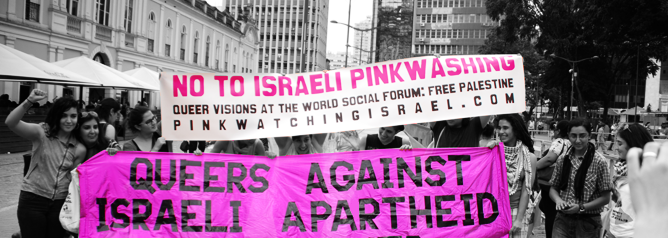
The term came into use after the initiation of Israel’s Pinkwashing campaign aimed at Palestinian queers living in the Occupied Territories with a promise of a queer-friendly nation at the cost of giving up the Palestinian struggle for freedom. The Palestinian refugee lobbies around the world have responded aggressively a powerful Boycott, Divestment and Sanctions (BDS) counter-campaign initiated by both queer and non-queer groups against Israeli products and propagandas which has been endorsed by numerous individuals and organizations around the world.
99 Organizations from 31 Countries Support Women & LGBTI People’s Call for Peace in Turkey
27 November 2015
Violence in the Middle East and Turkey escalates with each passing day. While the world’s eyes turn to the tragic attacks in Paris, what we are experiencing at present in our country is much more extreme than the past, and we are deeply worried about what tomorrow will bring. It seems like our very future, our fundamental human rights, and the most basic right to life are under threat. For the past 40 years, Turkey has been in a state of war that has deeply affected our society, especially women and girl-children in eastern Turkey, and it has become impossible to prevent severe rights violations. Since Turkey’s June 7th 2015 general elections, in a context of escalating violence and military operations, which have continued after the recent November 1stsnap elections, the Human Rights Association reports that: 262 civilian lives have been lost (602 lives in total, including soldiers, police and Kurdish militants); 759 people have been wounded; 5,713 have been detained; and 1,004 people arrested.[1]
In these conflicts in the Kurdish region, concentrated mostly in the provinces of Diyarbakır, Hakkari and Şırnak, in the towns of Cizre, Silvan, Nusaybin, Silopi and many others, some settlements have endured blockades and 24-hour curfews of over 10 days, threatening the lives of civilians, especially women, girl-children, and LGBTI people. While the people of these regions cannot even obtain the most basic necessities for life, like water, food, and electricity, thousands of them are being forced to leave their homes. Additionally, they cannot access health services: it has been reported that between August and October 2015, 300 women in the towns of Hakkari province (Şemdinli and Yüksekova) who could not leave their homes have had miscarriages or are in danger of suffering miscarriages due to the extreme stress and trauma they are undergoing.[2]
As Turkey’s women’s and LGBTI movements, we have repeatedly raised our voices to call for peace. However, at this moment, it is critically urgent that international solidarity networks be established with the women living in these conflict zones. 99 organisations from 31 countries have supported this urgent call and we have sent the following letter with their signatures to Turkish President and Prime Minister. We have also shared the Press Statement with the media in Turkey on 26th November 2015.
Honourable President Recep Tayyip Erdoğan
Honourable Prime Minister Ahmet Davutoğlu
The conflict in the eastern and south-eastern regions of Turkey has been causing civilians to lose their lives, be wounded, and has threatened their basic survival; women, girl-children and LGBTI are particularly affected. We are well aware from our own experience that this kind of escalating violence can greatly threaten women’s lives. This extremely worrying situation prompts us to act, as organisations working toward empowerment of women and LGBTI all over the world.
We remind you of Turkey’s international obligations under SR 1325, UN GA Res 65/283 (2011) co-sponsored by Turkey and Finland, and the most recent resolution adopted in Oct. 2015, Res. 2242, which call for the peaceful resolution of disputes, and for inclusivity and women’s participation specifically in peacemaking.
With this letter, we appeal to you to stop all attacks directed toward civilians in the country, we call on you return to ceasefire conditions and resume the dialogue and negotiation process that was initiated during the previous administration in 2013.
THE ORGANISATIONS MADE CALL FROM TURKEY
ORGANISATONS FROM WORLD SUPPORTING THE CALL
[1] “İHD: 7 Haziran’dan Beri 262 Sivil Öldü” (İHD: “Since 7th June, 262 civilians killed), BİANET, 12 Nov. 2015; “İHD raporu: 7 Haziran’dan beri 602 kişi hayatını kaybetti”(İHD Report: 602 people lost their lives since 7th June), Demokrat Haber, 12 Nov. 2015
[2] “Savaşta, doğmamış çocuklar da ölüyor”(In war, even unborn children are dying), Evrensel, 11 Nov. 2015
* * * * *
Download in PDF here.
19 November 2015
Violence in the Middle East and Turkey escalates with each passing day. While the world’s eyes turn to the tragic attacks in Paris, what we are experiencing at present in our country is much more extreme than the past, and we are deeply worried about what tomorrow will bring. It seems like our very future, our fundamental human rights, and the most basic right to life are under threat. For the past 40 years, Turkey has been in a state of war that has deeply affected our society, especially women and girl-children in eastern Turkey, and it has become impossible to prevent severe rights violations. Since Turkey’s June 7th 2015 general elections, in a context of escalating violence and military operations, which have continued after the recent November1stsnap elections, the Human Rights Association reports that: 262 civilian lives have been lost (602 lives in total, including soldiers, police and Kurdish militants); 759 people have been wounded; 5,713 have been detained; and 1,004 people arrested.[1]
In these conflicts in the Kurdish region, concentrated mostly in the provinces of Diyarbakır, Hakkari and Şırnak, in the towns of Cizre, Silvan, Nusaybin, Silopi and many others, some settlements have endured blockades and 24-hour curfews of over 10 days, threatening the lives of civilians, especially women, girl-children, and LGBTI people. While the people of these regions cannot even obtain the most basic necessities for life, like water, food, and electricity, thousands of them are being forced to leave their homes. Additionally, they cannot access health services: it has been reported that between August and October 2015, 300 women in the towns of Hakkari province (Şemdinli and Yüksekova) who could not leave their homes have had miscarriages or are in danger of suffering miscarriages due to the extreme stress and trauma they are undergoing.[2]
As Turkey’s women’s and LGBTI movements,we have repeatedly raised our voices to call for peace. However, at this moment, it is critically urgent that international solidarity networks be established with the women living in these conflict zones. To do this together with your support, thesignatories to this statement (listed below) appeal to you:
THE SIGNATORY ORGANISATIONS FROM TURKEY
THE LETTER TO SEND TO TURKISH GOVERNMENT
Honourable PresidentRecepTayyipErdoğan
Honourable Prime Minister Ahmet Davutoğlu
The conflict in the eastern and south-eastern regions of Turkey has been causing civilians to lose their lives, be wounded, and has threatened their basic survival; women, girl-children and LGBTI are particularly affected. We are well aware from our own experience that this kind of escalating violence can greatly threaten women’s lives. This extremely worrying situation prompts us to act, as organisations working toward empowerment of women and LGBTI all over the world.
We remind you of Turkey’s international obligations under SR 1325, UN GA Res 65/283 (2011) co-sponsored by Turkey and Finland, and the most recent resolution adopted in Oct. 2015, Res. 2242, which call for the peaceful resolution of disputes, and for inclusivity and women’s participation specifically in peacemaking.
With this letter, we appeal to you to stop all attacks directed toward civilians in the country, we call on you return to ceasefire conditions and resume the dialogue and negotiation process that was initiated during the previous administration in 2013.
Respectfully,
Name of the Organisation
Person in charge (if any)
E-Signature (if any)
[1]“İHD: 7 Haziran’dan Beri 262 Sivil Öldü”(İHD: “Since 7th June, 262 civilianskilled), BİANET, 12 Nov. 2015; “İHD raporu: 7 Haziran’dan beri 602 kişi hayatını kaybetti”(İHD Report: 602 peoplelosttheirlives since 7th June), Demokrat Haber, 12 Nov. 2015
[2]“Savaşta, doğmamış çocuklar da ölüyor”(Inwar, evenunbornchildrenaredying), Evrensel, 11 Nov. 2015
The international campaign for sexual and bodily rights titled “One Day, One Struggle” organized simultaneously by the Coalition for Sexual and Bodily Rights in Muslim Societies (CSBR) member organizations every year on November 9 was realized in 8 countries this year with various events held by 20 organizations.
Two separate events were organized in Turkey as part of the international campaign. CSBR member Kaos GL Association supported by the Foundation for Society and Legal Studies (TOHAV) organized a “Workshop on Psycho-Social Support” for LGBTI activists in Ankara, while CSBR members Women for Women’s Human Rights-New Ways (WWHR) and Lambda
İstanbul LGBTI Solidarity Association partook in the campaign with a “Panel on the Sexual and Bodily Rights of Refugee Women and LGBTI” held in İstanbul Bilgi University Social Incubation Center in İstanbul.
Convening at the “Workshop on Psycho-Social Support” co-organized by Kaos GL Association and TOHAV, LGBTI activists discussed ways of “healing” together in the aftermath of the Ankara massacre, easing the pains through solidarity, and continuing the struggle by preserving the hope amidst our current environment of war and violence. The most important outcome of the workshop that lasted two and a half hours was the emphasis on standing together as a powerful impetus in resisting for peace.
 Şehnaz Kıymaz Bahçeci of WWHR-New Ways delivered the opening speech of the “Panel on the Sexual and Bodily Rights of Refugee Women and LGBTI” which was heavily attended by individual participants as well as representatives of numerous non-governmental organizations working in fields of women, LGBTI and human rights. Information on CSBR and the “One Day, One Struggle” campaign was relayed in the opening speech conveying that the coalition was established in 2001 as an international entity with the aim of creating a common line of struggle for sexual and bodily rights advocates and expanding the fields of struggle for feminists, activists and rights advocates in face of increasing pressure created by religion and traditional norms and rising conservative policies in the political arena. Bahçeci explained that since 2009 CSBR has been organizing the “One Day, One Struggle” campaign every year on November 9 in order to draw attention to sexual, bodily and reproductive rights and the struggle carried out for these rights. She emphasized our ever growing need to come together against the problems of refugees, which we witness everyday especially in big cities, escalated by the ongoing war in Syria. She underlined the importance of the women’s movement acting in solidarity with refugee women and LGBTI.
The panel was moderated by İstanbul University Faculty of Political Sciences lecturer Associate Professor Zeynep Kıvılcım who conducts field research on Syrian refugee women and LGBTI. Proffering examples from the dialogues that take place during her research, Kıvılcım said, “We are in the fourth year of the war that erupted in Syria and we are responsible for our reticence. We must take action on this issue all together. This ongoing state of the Syrians’ lack of status must be ended immediately.”
In her speech titled “The Gender of Immigration” Özgül Kaptan, who has been working in the field with refugee women for almost two years on behalf of Women’s Solidarity Foundation (KADAV) and Women Without Borders, explained the terms that define emigrants such as immigrant, asylum-seeker, refugee, guest, illegal alien, undocumented, etc. Noting that the term “illegal alien” used for paperless immigrants who have not been registered has an escalating effect on hate speeches against immigrants, Kaptan emphasized the importance of dialogue and solidarity for the solution of these problems.
 Nilgün Yıldırım Şener of the Human Resource Development Foundation (İKGV) stated that sexual violence is used as a method of war between the fighting parties in Syria. Giving examples from the cases they encounter in the counseling center for Syrian asylum-seekers set up in Esenler, İstanbul, Şener stressed that 10 out of every 100 asylum-seekers applying to the center have been subjected to sexual violence. She said that among the case files opened at the center during the January-July 2015 period, 89 of the sexual violence victims were women, 37 men, and 9 were LGBTI individuals. Delivering a summary of the sexual and bodily rights violations of women and LGBTI, Şener underlined that housing is the gravest problem along with the very widespread fear of harassment and rape. She also talked about the prevalence of major problems such as the constantly changing practices regarding access to health care services, and the impossibility of access to services such as birth control and abortion.
Diyarbakır Metropolitan Municipality Fidanlık Yezidi Camp director Müzeyyen Anık Aydın expounded the conditions and difficulties in the Yezidi camps maintained with the efforts of municipalities in the region without any financial or infrastructural support from the state. She said that presently in the camps there are around 4,000 Yezidis among whom there is a prevalent practice resembling the caste system, and that all decisions concerning women are taken by men. Aydın underlined that immigrant Yezidi women cannot practice their sexual and bodily rights and that there are severe rights violations. Further explaining that municipalities try to provide all services including shelter, health and education for the Yezidis who do not receive any form of state support, Aydın stated there are major shortages primarily in terms of human resources.
Lawyer Fırat Söyle of Lambdaİstanbul LGBTI Solidarity Association stated that as Lambdaİstanbul they have established a commission for refugees and are providing legal support for LGBTI refugees who apply to them. Noting that the rights violations experienced by LGBTI in Turkey are experienced also by refugees, Söyle observed that despite the immigration administration put in place the system is run by the police, and that the number of LGBTI refugees who have to do sex work in order to meet their needs for shelter and food is increasing by the day. Söyle added that the trans individuals held in camps in satellite towns cannot access the health services and medicine they require for their transition process.
The panel which was concluded with a question-and-answer session emphasized the importance of recognizing the existence of immigrants in Turkey and conducting common works to lead a life together, and made suggestions for creating public opinion towards the adoption and implementation of legal regulations required for the refugees/immigrants/asylum-seekers to lead humane lives; supporting refugee women and LGBTI to create their own initiatives for organizing; opening multilingual and multicultural counseling centers; and developing solutions through solidarity networks. All these discussions were also shared live in social media through @kadinih and @lambda_istanbul twitter accounts.
12.11.2015
Kadının İnsan Hakları – Yeni Çözümler Derneği / Women for Women’s Human Rights-New Ways (WWHR) www.kadinininsanhaklari.org, Tel : (+90) 212 251 00 29
Lambdaİstanbul LGBTİ Dayanışma Derneği / LambdaIstanbul LGBTI Solidarity Association
http://www.lambdaistanbul.org, Tel: 0549 490 90 71
Kaos GL Derneği / Kaos GL Association www.kaosgl.org Tel : +90-312-2300358 Faks : +90-312-2306277
GISWatch 2015 is out, with a focus on Sexual Rights & the Internet. This edition brings together 57 country reports on a wide array of sexual rights issues, including: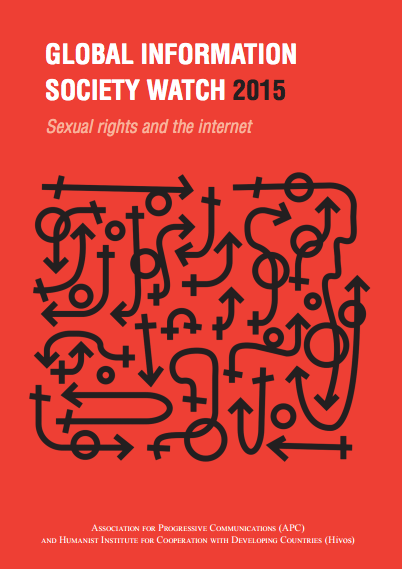
The Global Information Society Watch (GISWatch) 2015 presents stories from around the world on how the politics of sex and sexual rights activism takes place online. Since 2007, the GISWatch provides a space for collaborative monitoring of implementation of governments commitments towards the creation of an inclusive information society.
The topics of the 57 country reports gathered in this year’s GISWatch are diverse, ranging from the challenges and possibilities that the internet offers lesbian, gay, bisexual, transgender and queer (LBGTQ) communities, to female genital mutilation, the suppression of sexual rights such as same-sex marriage and the right to legal abortions, to the rights of sex workers, violence against women online, and sex education in schools. Each country report includes a list of action steps for future advocacy.
The eight thematic reports introduce the theme from different perspectives, including the global policy landscape for sexual rights and the internet, the privatisation of spaces for free expression and engagement, the need to create a feminist internet, how to think about children and their vulnerabilities online, and consent and pornography online.
The timing of this publication is critical: many across the globe are denied their sexual rights, some facing direct persecution for their sexuality (in several countries, homosexuality is a crime). While these reports seem to indicate that the internet does help in the expression and defence of sexual rights, they also show that in some contexts this potential is under threat – whether through the active use of the internet by conservative and reactionary groups, or through threats of harassment and violence. The reports suggest that a radical revisiting of policy, legislation and practice is needed in many contexts to ensure that the possibilities of the internet for guaranteeing sexual rights are realised all over the world.
Reposted from: GenderIT.org
1 November 2015

Dark Days for the Fairer Sex
Malaysia used to have one of the most progressive Muslim family laws in the world but by 2003, we are right there at the bottom, thanks to amendments to the law which discriminated women.
IN the latest UN report on Progress of the World’s Women 2015-2016, Malaysia is ignominiously lumped with Algeria, Bangladesh, Egypt, Iran, Jordan, Pakistan and Saudi Arabia, as countries that have maintained highly discriminatory family laws.
It is not that all these worst countries have laws based on Islam, for there are many Muslim countries with far better family laws. The significant finding is that women’s groups face the biggest resistance to reform when state and religion are closely intertwined. In such countries, religious doctrine is less likely to evolve and adapt to changing social practices as patriarchal interpretations of religion get frozen.
In contrast, the report highlighted the achievement of Morocco where the women’s movement mobilisation for family law reform, the election of a socialist party into power and the ascendance of a young progressive King successfully led to an overhaul of its Muslim family law.
The concept of male authority over women and a wife’s duty to obey the husband were abolished.
The law established equal rights and responsibilities within the family, heralding the Moroccan Moudawana today as the most progressive in the Muslim world.
What is so obviously missing in Malaysia is the political will to do what is right, what is just and fair for women.
While the nation’s leaders regularly pledge internationally their commitment to women’s equality and non-discrimination, a different story plays out at home, especially where the rights of Muslim women are concerned.
That a high middle-income supposedly modern and progressive country can be mentioned in the same breath with countries such as Saudi Arabia, Iran, Pakistan, and Bangladesh just shows how low this country has sunk with regard to women’s rights in Islam.
A country that in the 1980s had one of the most progressive Muslim family laws in the world, by 2003 had fallen to the bottom through two rounds of amendments that grossly discriminated against women.
Two weeks ago, the Sisters in Islam’s national convention on Muslim Family Law reform brought together some 150 single mothers and other concerned women from nine states – tired and angry women who have suffered the injustices of patriarchy at home and in the court system.
I’ve not seen a bigger group of outraged Malay women who felt that this government had turned its back on them. Their litany of complaints was not just long, but also old.
They’ve been saying it over and over again, and yet change has hardly come.
One single mother who filed for divorce within six months of marriage because of domestic violence took eight years to finally get her divorce – this in spite of 48 police reports against her husband.
And she is still battling him in court as further discriminatory amendments to the Islamic Family Law in 2005 now enables him to claim for a share of her assets that include a house that she had acquired before their marriage.
As much as it was heartbreaking to hear the endless stories of injustices, it was also heartwarming to see single mothers coming together to fight for their rights.
They were strong, articulate, confident. They knew their rights and they knew they had been betrayed.
Angry at the absence of any representation from the government (several opposition Members of Parliament and political aides came), the women declared that they really should be forming a new political party to fight for their rights as it was obvious, they said, that the government and its various arms really did not care for their interests.
Over three days, they learned how to facilitate and work together to define issues, and identify and cluster themes. They broke into groups to discuss the kinds of changes they wanted to see in law and procedure, on long-standing problematic issues over polygamy, divorce, division of matrimonial assets, children’s maintenance, financial compensation, and domestic violence.
They were tired that the men in their lives who had failed to provide and protect the family well-being were not punished for their bad behaviour. They demanded that fathers who failed to pay regular maintenance for their children and failed to provide the financial compensation due to the wives upon divorce should be prohibited from renewing their driver’s and business licences, and international passport, and that they should also be blacklisted and prevented from getting any bank loans, as is practised in Singapore.
They wanted the courts to use more frequently the existing provision of imprisoning these men for contemptuously ignoring court orders to provide for maintenance. They wanted the rules changed to enable the court to order that all arrears in maintenance could be deducted immediately from the men’s EPF funds – again as practised in Singapore.
On the issue of polygamy, they wanted the fifth condition for polygamy in the original 1984 family law be reinstated – that there will be no drop in the standard of living of the existing wife, children and dependents.
They wanted the courts to be strict in obtaining documented evidence that the man is truly able to afford a second family. They wanted a division of the matrimonial assets done and the monthly maintenance for the existing wife and children determined before the second marriage is allowed to take place.
They wanted a computerised central registration of marriage and divorce so that anyone can access the data system to check if their husband or the man they wanted to marry already had another wife.
Many of the women at the convention have faced long delays in getting a divorce because some husbands felt affronted that their wives could have the gall to demand their rights under the law.
While a man can simply divorce his wife without any reason, these women go through years of delays, including attempts at counselling and reconciliation that they felt were useless.
They had already endured years of trying to make the marriage work, so they said the state should trust their wisdom that when they finally decided to file for divorce, it meant the marriage was beyond repair.
So please don’t go through the motions of reconciliation that leads to nowhere, they said. Not even the husband who is challenging the application for divorce wants reconciliation.
He is just being vindictive, said the women, and the court should see through his charade.
Again, as practised in Singapore, they want the law changed where through talaq tafwid, the husband who is reluctant to pronounce divorce, can be ordered by the court to delegate it to his wife and she can pronounce the divorce on him before the judge.
Why is it that women of other faiths in Malaysia have been able to benefit from over 30 years of equal treatment in family law, while Muslim women are still regarded as inferior to Muslim men, under his authority and control?
Muslim men are privileged because they supposedly have a duty to protect and provide for the women and children in the family.
But in reality, as the experience of these single mothers show, these men neither provide nor protect their families. It is the women who as heads of households, provide and protect.
And yet men’s privileges in law and practice continue undisturbed, as if the realities on the ground do not matter to those who have the authority to make the desperate changes needed to ensure the well-being of the family.
What more needs to happen before these patriarchs open their eyes, their minds and their hearts that Muslim women too want to be treated as human beings of equal worth and dignity? What is so unIslamic about that?
* * * *
By: Zainah Anwar
Reposted from: The Star Online
Update from Mada Masr
Hossam Bahgat was released from military intelligence at midday on Tuesday after he signed a document stating, “I, Hossam Bahgat, journalist at Mada Masr, declare that I will abide by legal and security procedures when publishing material pertaining to the Armed Forces.”
“I was also not subjected to any moral or physical harm,” the document stated.
It remains unclear whether the charges leveled against him have been dropped.
The military prosecution ordered the detention of Bahgat for four days on Monday, pending investigation into charges of publishing false news that harms national interests and disseminating information that disturbs the public peace.
Mada Masr contributor Bahgat has been charged with violating Articles 102 and 188 of the Penal Code. Article 102 stipulates an unspecified prison sentence and a fine of LE50–200 for deliberately broadcasting false information that disturbs public security, incites public panic and harms the public interest.
Article 188 stipulates a maximum one-year sentence and/or an LE5,000–20,000 fine for falsely attributing sources or involuntarily disseminating false information or forged documents that disturb public order, incite public panic and harm the public interest.
Egyptian Initiative for Personal Rights (EIPR) Director Gasser Abdel Razek told Mada Masr that military interrogators finished questioning Bahgat late Sunday, and lawyers expected military prosecutors to issue a final decision by Monday morning.
Several lawyers attended Bahgat’s interrogation, including Negad al-Boraie, Hassan al-Azhari, Khaled Ali, Adel Ramadan and Hoda Nasrallah. A source at the Journalists Syndicate told Mada Masr that their lawyer was also sent to attend.
Bahgat received a summons from Military Intelligence at his home in Alexandria on Thursday. He arrived at Military Intelligence headquarters in Nasr City at 9 am on Sunday. In accordance with standard procedures, he was not allowed to enter with his phone, or be accompanied by a lawyer.
After several hours with military intelligence, Bahgat was transferred to military prosecution, where several lawyers headed when news of his interrogation was communicated.
According to lawyers, military prosecutors refused to disclose Bahgat’s current whereabouts.
In a statement, Amnesty International said Bahgat’s interrogation “is a clear signal of the Egyptian authorities’ resolve to continue with their ferocious onslaught against independent journalism and civil society.”
“The arrest of Hossam Bahgat today is yet another nail in the coffin for freedom of expression in Egypt. He is being detained and questioned by the military prosecutor for peacefully exercising his right to freedom of expression and must be immediately and unconditionally released. Any charges brought against him must be dropped,” said Philip Luther, director of the Middle East and North Africa Program at Amnesty International.
“The Egyptian military cannot continue to consider itself above the law and immune from criticism,” he added.
In a statement late Sunday, the Community to Protect Journalists (CPJ) called on Egyptian authorities to immediately release Bahgat.
“The Egyptian military has already indicated its contempt for the role of an independent media with a series of arrests of journalists. This latest detention is a clear attempt to stifle reporting,” CPJ Middle East and North Africa Program Coordinator Sherif Mansour said. “The Egyptian authorities should release Hossam Bahgat immediately. The fact that he was questioned for so long without his lawyers present only heightens the outrage.”
Bahgat founded EIPR, Egypt’s flagship human rights organization, before embarking on a career in journalism. He received Human Rights Watch’s Alison Des Forges Award in 2011.
Bahgat has written for Mada Masr since 2014. His latest article, “A coup busted,” is an investigation into the secret military trial of 26 officers for plotting “regime change” in coordination with the Brotherhood.
He also wrote a report on the “Arab Sharkas cell: The quasi-covert trial of Ansar Beit al-Maqdes,” as well as “The Mubarak mansions,” which revealed how Egyptians unknowingly paid for the ruling family’s lavish lifestyle. His piece “Who let the jihadis out?” explored who was responsible for the pardon of Islamists post-2011.
9 November 2015
Call to Action: Egyptian Journalist & Human Rights Defender Hossam Bahgat Must Be Released
The Coalition for Sexual and Bodily Rights in Muslim Societies (CSBR) calls for the immediate release of Hossam Bahgat, and for any and all charges against him to be dropped without condition.
Hossam Bahgat is a leading Egyptian journalist and human rights defender, and is also the founder of the Egyptian Initiative for Personal Rights (EIPR). Hossam Bahgat is being unlawfully detained by the military prosecutor, with the location of his whereabouts unknown.
PLEASE TAKE ACTION in circulating the news, and writing to your governments and diplomatic missions, asking them to call for the immediate release of Hossam Bahgat. Please use the information provided below in your actions.
Background:
On Thursday 5 November, a ranked officer left a note summoning Hossam Bahgat to military intelligence unit 77 in Cairo’s eastern district of Nasr City, for 09h00 on Sunday November 8th. Hossam Baghat was accompanied by two friends to the summons, who saw him enter Unit 77 just after 09h30 on November 8th.
For the next eight hours, Hossam Bahgat was interrogated without legal counsel, his whereabouts unknown. It was later learned that he was transferred from the military intelligence unit to the military prosecution around midday. It was only after 17h30 that Bahgat was allowed to call lawyers of his choosing.
After that point, 15 human rights lawyers attended the on-going interrogation. His lawyers said that the military prosecutor had interrogated Hossam solely in connection with his writing and in particular the one investigative report he wrote for the online newspaper Mada Masr on 13 October 2015.
They said that the charges against him were Article 102 bis “deliberately spreading false information with the purpose of harming public order or public interest” and Article 188 “publishing, with malicious intent, false news that is likely to disturb public order.”
Violation of Constitutional Rights & Human Rights: In a statement on November 8th, Amnesty International said Bahgat’s interrogation “is a clear signal of the Egyptian authorities’ resolve to continue with their ferocious onslaught against independent journalism and civil society.”
It is well known that Egypt’s military intelligence had summoned a number of journalists in recent months under the auspices of a draconian ‘counter-terrorism’ law that criminalizes journalists who publish information that differs from the accounts of the Ministry of Defence.
However as Egypt’s civil society groups have noted, these interrogations have usually lasted a few hours, and often ended with a pledge from the journalist to commit to cease publications on specific topics.
The decision to detain Bahgat for 4-days on the basis of his journalism, after eight hours of interrogation without legal counsel, and then to refuse to release information on his whereabouts today, represents a clear move to intimidate civil society and a heightened attack on what little space for freedom of expression in Egypt remains.
The decision is also a gross violation of Hossam Bahgat’s constitutional and human rights, particularly Article 71 regarding freedom of publication of the 2014 Constitution, as well as Egypt’s responsibilities under Article 19 of the International Covenant on Civil and Political Rights (ICCPR).
CSBR calls for the immediate release of Hossam Bahgat and for any and all charges against him to be dropped without condition. Please take action by contacting your governments today.
TAKE ACTION:
(1) WRITE/EMAIL/TELEPHONE your governments at home, as well as your government’s diplomatic missions in Egypt:
(2) Spread the news and contact your governments on TWITTER:
@_______ @______ @_______ must demand #Egypt government #FreeHossam immediately&unconditionally. http://bit.ly/1M3hUth
(3) Share this release across your social media platforms
* * * *
For more information, please contact eipr@eipr.org
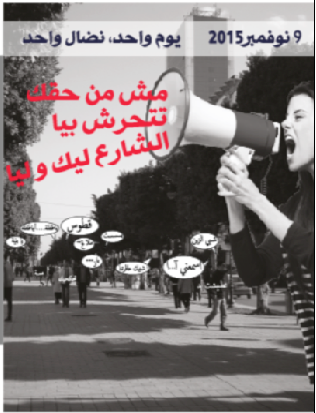
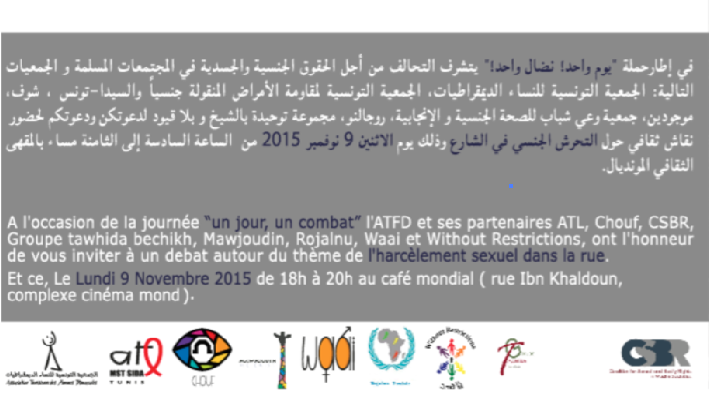
For One Day One Struggle 2015, l’Association Tunisienne des Femmes Démocrates (ATFD), in collaboration with ATL, Chouf, Groupe tawhida bechikh, Mawjoudin, Rojainu, Waii and Withour Restrictions are hosting two events looking at sexual harassment in public spaces.
Since 2004, Article 226 of the Tunisian penal code defines sexual harassment as ‘any persistence in the discomfort of others by the repetition of acts, words or gestures with the aim of bringing it to submit to his own sexual desires’, and carries a punishment including a one-year prison term and fine of up to 3000 dinars.
Yet according to civil society groups, the law that exists fails to provide effective and accessible redress and recourse to women bringing charges. Perhaps most problematically, the current law places the burden of proof on the person bringing the charge, and failure to prove that sexual harassment has occurred itself may result in fines or imprisonment for bringing a false accusation. Such a system actively discourages people from lodging a complaint for fear of reprisal, and heightens the disincentive to report for those who already feel stigma and shame from the experiences of being sexually harassed.
Another key challenge is that the law in Tunisia still narrowly focuses on sexual harassment as a phenomena limited to the workplace, completely overlooking the kinds of sexual harassment that are a daily challenge for women across Tunisia.
Sonya Ben Yahmed of ATFD shared with us the need to shift perceptions:
“Sexual harassment in public places, in the streets, is phenomenal in Tunisia. We don’t talk about it, or at least we don’t talk about it enough. It’s a huge problem here, and personally when I talk about it, people always say to me ‘Hey come on, at least we’re not in Egypt’.

Things in Egypt are have become so very challenging, of course, but being harassed in Tunisia is also totally normalized, and seen as completely banal, to the point that so many of us don’t even know how to articulate what it means to be harassed. And I’m talking about those of us who are being harassed, because the harassers know exactly what it is they are doing.
… In 2003, we’ve campaigned on the issue of sexual harassment before. We held seminars, made stickers and pamphlets, and wrote to parlement to denounce sexual harassment. And we did gather the testimonies of women’s experiences of sexual harassment, but usually this was women who have experienced sexual harassment at the workplace, and who have been fired as a result for wanting to talk about it. This was before the law was passed in 2004.
So looking at sexual harassment is not new for civil society groups in Tunisia, but [this focus on the workplace] is also why we don’t have much research or documentation to talk about sexual harassment in public spaces. We don’t have numbers, we don’t have a way to gage the issue with a lot of data, but in the last few years it is clear that it is more and more of a daily problem that women and people of different sexual orientations and gender identities are facing in the streets.
That’s why we decided to talk about this taboo topic. It is still something we cannot talk about openly, the victims still feel ashamed about it. It’s hard enough even to respond to a harasser in public space. So many times we opt to ignore it, or leave the bus or the public space, without being able to take that space to say “Stop!”, or “Hey, you just violated me” and put it in those terms.”
For ATFD, looking at all forms of violence against women, including sexual harassment in public spaces, also requires engaging men in challenging the hegemonic construction of ‘masculinity’ as inherently aggressive. “We need men to be present with us, at our events and engaging in these conversations also. We need them standing up and challenging the idea that masculinity is always aggressive, and working towards the solution. We need everyone to understand that harassment against women is a problem for all of society. And we want to raise the visibility that people of different sexual orientations and gender identities are also particularly targeted with this event.”
While a discussion and debate at a cafe in the city centre is planned for the evening, the day’s action also includes a component of going out into the streets to engage the wider community.
“For us this event is a chance have an action in a public space, either the streets or perhaps public transportation, or both. We’re not only hosting a seminar, or talking between walls, but we’re going outside to talk to people in the places where women and minorities are harassed, to take a public stand against this taboo. The idea is really to talk to people about sexual harassment, provide information on what sexual harassment is, and encourage women especially to talk about their experiences. We need new reactions to sexual harassment and new forms of engagement on the streets, and for us this event is a starting point for that.”
The #OneDayOneStruggle evening event is planned for 18h – 20h, at Cafe Mondial, Tunis. For more information about the event, see: https://www.facebook.com/Un-Jour-Un-Combat-996099703765811/